
Last updated November 14, 2026
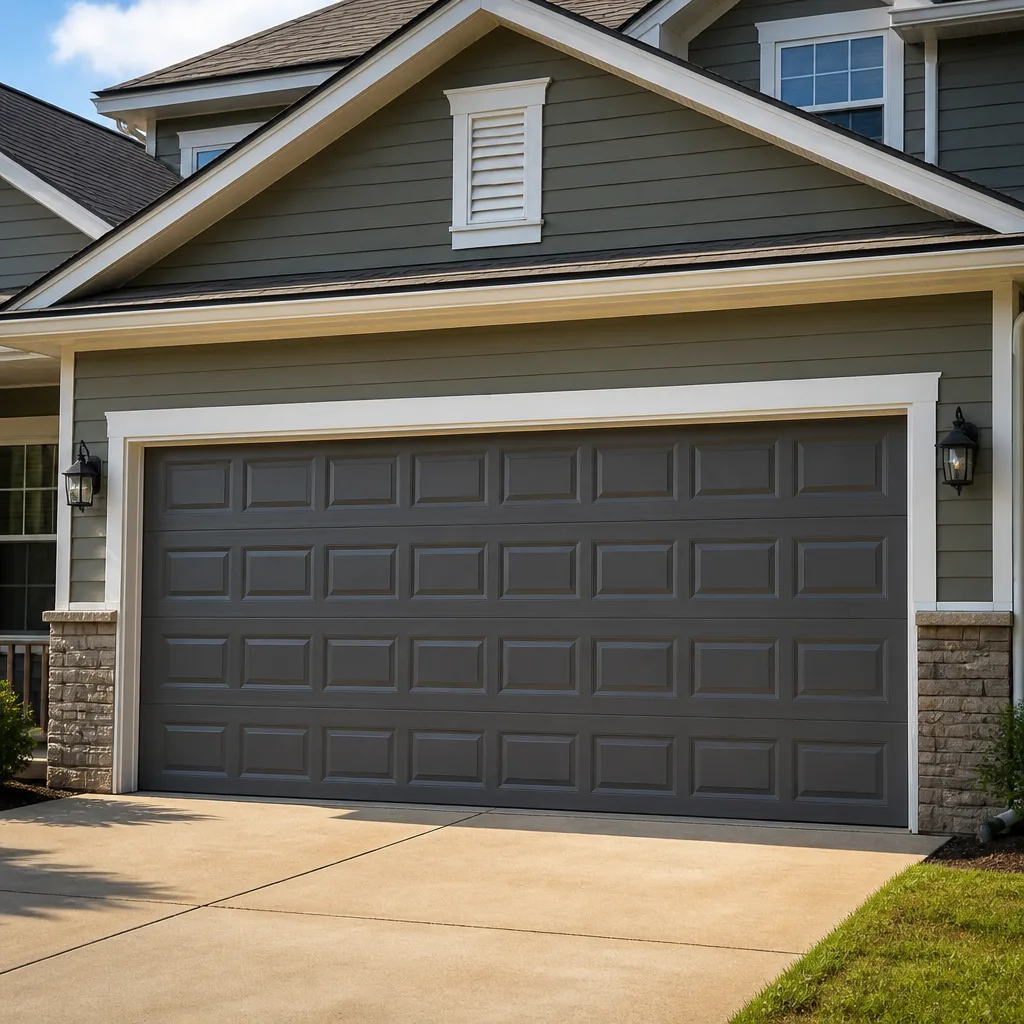 Raised-panel steel
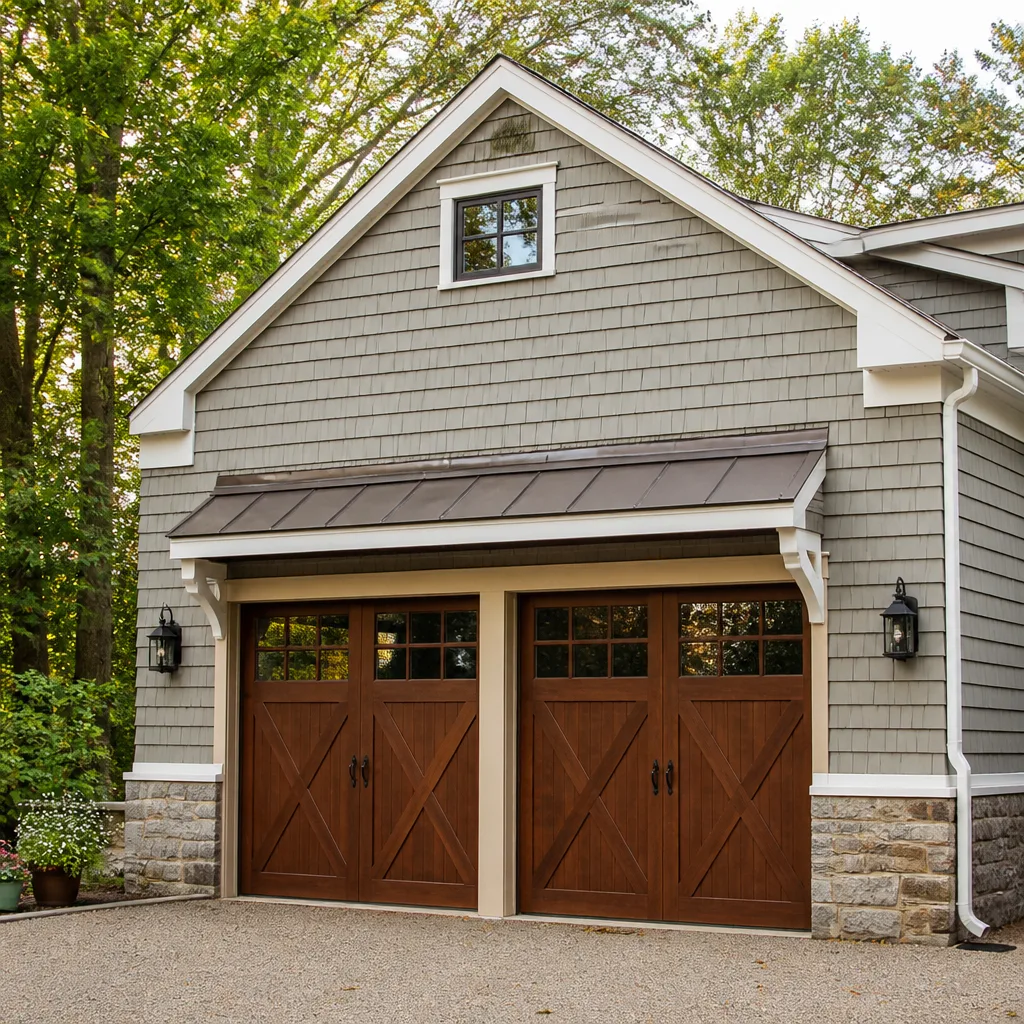 Carriage house
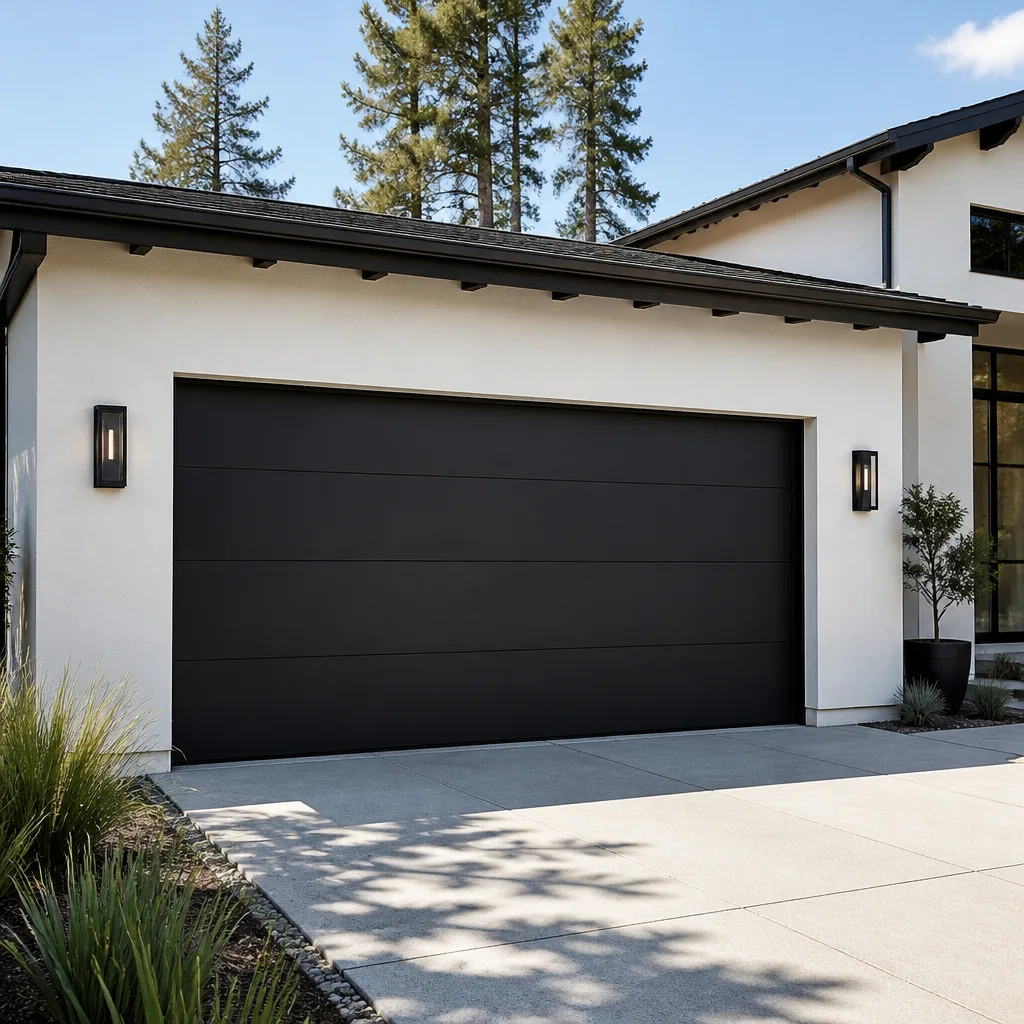 Modern flush
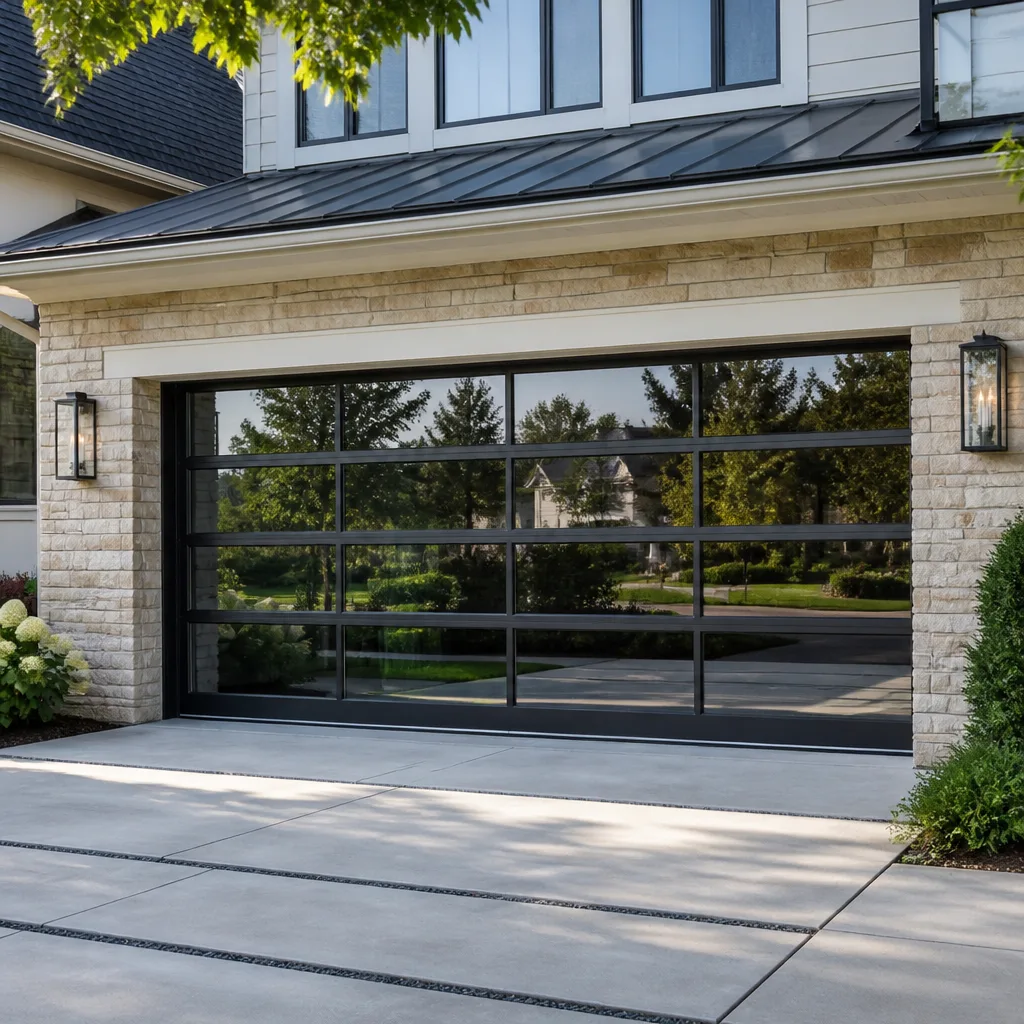 Full-view glass
 LiftMaster openers
 Chamberlain openers
Full 25-point door and opener safety check with every visit - springs, cables, rollers, tracks, and your LiftMaster or Chamberlain opener included
You get a price before we start. It does not change when the pro arrives.
Get your free estimateSeasonal Garage Door Care for Visalia: Year-Round Homeowner’s Guide
Most garage door advice you’ll find online assumes four equal seasons. Visalia doesn’t work that way. What we actually get is a long, dry stretch that bakes hardware through July and August, a short spring and fall that barely register, and a tule fog season that can run from November into February and leaves more moisture sitting on steel than most homeowners realize. That mismatch is why so many valley doors fail at the two worst times of year: the first hot week of summer and the deepest stretch of winter fog. This guide maps garage door care to Visalia’s real weather patterns, month by month, so you can catch problems before they become repair bills. You’ll get a task calendar, a few specific checks, and a clear sense of what you can handle and what needs a technician.
Quick Answer
The single most valuable time to service a garage door in Visalia is May, right before the summer heat peak, when you should lubricate moving parts, test the opener’s force settings, check the balance of the door, and inspect seals and weatherstripping. Winter matters too, but for a different reason: tule fog from November through February drives sustained humidity that corrodes hinges, springs, and steel panel surfaces, so a mid-winter check of hardware and bottom seals is the second-most important task on the calendar. A 15-minute inspection every season catches most failures before they strand the door.
Styles & brands we work with
- Raised-panel steel
- Carriage house
- Modern flush
- Full-view glass
- LiftMaster openers
- Chamberlain openers
Table of Contents
- Why Visalia’s Climate Breaks Standard Garage Door Advice
- Month-by-Month Garage Door Maintenance Calendar for Visalia
- Pre-Summer Prep in May: The Highest-ROI Window of the Year
- How Tule Fog Season Affects Your Bottom Seal, Sensors, and Steel Panels
- Prepping Your Opener for Sustained 100°F+ Heat
- The 15-Minute Seasonal Inspection That Catches Most Problems
- Harvest Dust and the Fall Transition
- Winter: What to Watch Between Fog Cycles
Why Visalia’s Climate Breaks Standard Garage Door Advice
Visalia doesn’t ease into summer. The valley floor heats fast, and by late June you’re looking at weeks where afternoon temperatures push past 100°F with regularity. A garage door is a large metal structure that absorbs that heat all day on both the exterior and interior faces. Springs, hinges, rollers, and the opener motor all sit inside that heat envelope. Meanwhile, your house may be air-conditioned but the garage usually isn’t, so the door and its hardware experience wider swings than the living space does.
Then, sometime in November, the fog arrives. Tule fog settles into the valley and can persist for days, keeping relative humidity high for weeks at a stretch. This is the part of the Visalia climate calendar that most maintenance advice entirely misses. Garden-variety “check your garage door each spring” guidance doesn’t account for a two-to-twelve-week stretch of persistent fog that keeps bottom seals wet, dampens photo-eye lenses, and lets condensation form on cold steel panels.
The transitions are short. Spring in Visalia can feel like two or three weeks of comfortable weather before the heat hits, and fall is similar on the back end. That leaves you with two real maintenance anchors:
- May, before the heat peak. Prep everything that will run hot.
- Between fog cycles, roughly December and February. Inspect what the moisture has touched.
Spring and fall aren’t useless, but they’re transitional. Expect to touch the door lightly and not dive into a full inspection. If you live in a neighborhood like Riverway or Highland Park and your garage faces west, the afternoon heat load is going to be your biggest enemy through summer. If you’re in a newer development east of town, your fog exposure might be a bit lighter than a home near the river bottom. Either way, the calendar below will keep you on track.
Month-by-Month Garage Door Maintenance Calendar for Visalia
Generic seasonal care uses “spring/summer/fall/winter” buckets. This calendar breaks it down to what’s actually happening in Visalia each month, so the task matches the pressure your door is under. Use it as your planning reference.
January
- Inspect bottom seal for cracking or moisture damage from the fog season.
- Wipe photo-eye lenses with a dry cloth, then a slightly damp cloth if fog condensation has left streaks.
- Check hinges and rollers for rust stippling.
- Test the opener’s safety reverse by placing a small object in the door’s path.
February
- Second hardware moisture sweep. Pay attention to spring coils, where rust accelerates.
- Inspect the bottom of panels for any bubbling or lifting at the paint line.
- Confirm the door is balanced. Disconnect the opener and lift halfway by hand. If it doesn’t stay, get it checked.
March
- Clean track and wipe with a dry cloth. No lubrication in tracks.
- Lubricate hinges, rollers, springs, and bearings with a door-specific lubricant.
- Check that weatherstripping around the sides and top hasn’t pulled away.
April
- Test the opener’s force setting. Doors should reverse on contact with a low object.
- Check the battery backup on the opener if you have one.
- Look at the garage door opener rails and belt or chain for slack or fraying.
May
- Pre-summer inspection: the full checklist in the next section.
- Lubricate everything one more time before the heat arrives.
- Vent check on the opener motor housing.
- Tighten all visible bolts on hinges and brackets.
June, July, August
- Monthly opener force test – heat stresses the motor’s electronics.
- Watch for any hesitation or grinding in the opener on hot afternoons.
- Listen for unusual squeals or groans from springs on hot days.
- Keep an eye on the bottom seal, which can dry-crack in sustained heat.
September
- Harvest dust check. Clean photo eyes and openers’ vents.
- Clear any dust or debris around the door tracks and threshold.
- Wipe down exterior panels and check paint integrity.
October
- Fall inspection: hinges, springs, rollers, and opener.
- Check the bottom seal again after the hot season.
- Clear the tracks one final time before fog season.
November
- Fog season starts. Wipe down steel panel surfaces with a light oil or wax product.
- Inspect the photo-eye lenses and clean if necessary.
- Confirm exterior seals don’t trap moisture against the door.
December
- Mid-fog-season hardware inspection. Hinges, rollers, and spring coils.
- Clean and dry bottom seal as much as possible between fog cycles.
- Test the reverse setting again.
The biggest mistake is to only look at the door in spring when the car’s out of the garage. That rarely catches the two most common Visalia failure modes: heat-stressed springs in late summer, and rust-prone hardware after fog season in January and February.
Pre-Summer Prep in May: The Highest-ROI Window of the Year
If you do one thing this year, do it in May. The pre-summer window is the highest-return maintenance period in this climate because it deploys your checks before the door has to fight the heat. Every spring, hinge, roller, and motor part you grease or tighten in May gets you through the hottest part of the year in better shape. Skip this step and the door faces peak load on worn or dry bearings.
Here’s the checklist we recommend working through in May:
- Balance test. Disconnect the opener and lift the door halfway. If it doesn’t hold its position, springs are out of adjustment or wearing out. That’s a safety-critical issue – do not attempt to adjust springs yourself. Call a technician.
- Lubricate everything that moves. Hinges, rollers, bearing plates, spring coils. Use a lubricant specifically made for garage doors, not WD-40. Grease ten minutes before you close the door for the evening, not in the morning, so it has time to set.
- Tighten visible hardware. Start with hinge bolts, then roller brackets. Loose hardware during the summer heat can shake itself into failure.
- Opener force test. Raise the door, place a small object in its path, and lower the door. It should reverse on contact. If it stops and pushes hard, the force setting needs adjustment.
- Opener motor vent check. On most LiftMaster, Chamberlain, or Genie units, there’s a small vent or housing that should be clear of dust and cobwebs. Clean it with a soft brush. Detail below.
- Weatherstripping and bottom seal. Check for cracks, drying, or failure. If the seal is dry-cracked before summer, it won’t seal against dust or heat, and it’ll let in hot air all summer.
- Exterior paint integrity. On steel panels, chips of paint can let rust start on the substrate. Touch up any chips you find.
- Track alignment. Check that the door runs smoothly along both tracks. If it binds or catches, don’t force it. The track or rollers are out of alignment.
That whole list takes an experienced pair of hands about 45 minutes to an hour. If you’re not comfortable with the balance test or the opener force setting, that’s the moment to bring in a technician. If you’re noticing the door binding, sticking, or running harder than usual heading into summer, that’s a sign to schedule a garage door repair before the heat does more damage. Our free estimates make that decision low-risk.
How Tule Fog Season Affects Your Bottom Seal, Sensors, and Steel Panels
Tule fog is the single most underrated garage door stressor in Visalia. It forms typically from November through February, and it can sit for days or weeks at a time. During that stretch, relative humidity in your garage stays elevated. Three specific parts take the brunt:
The bottom seal
The rubber bottom seal (sometimes called the astragal) is the first line of defense against moisture. Fog humidity, combined with the fact that the bottom of the door sits right on the slab, means the seal is often the wettest part of the assembly. It dries out slowly, and repeated wet-dry-wet cycles accelerate cracking and shrinkage. A shrunken seal lets in fog-humid air, dust, insects, and if you’ve got small animals, they’ll find it too. If you see cracks visible from standing height or gaps between the seal and the floor, replace it before fog season deepens.
The photo-eye sensors
Photo-eye sensors are the small electronic eyes near the floor of each track. They bounce a beam across the door opening. If that beam is broken by moisture, condensation, or fog leaving light surface residue on the lenses, the door won’t close. That can look like a mystery malfunction – the door starts down and then reverses for no obvious reason. The fix is usually as simple as wiping the lenses with a dry cloth, followed by a slightly damp cloth, then dry again. Do this at the start of fog season, and again when fog is heaviest.
Steel panel surfaces
Cold steel panels in a humid garage pull condensation out of the air. That leaves a fine mist of moisture on painted steel surfaces, especially when the door is shut and the garage is cooler than the outside air. Over many fog cycles, condensation can cause rust stippling at paint chips, seams, and the bottom edge of panels. A light coat of a door-specific wax or oil product applied in November, before the fog settles in, gives the paint an extra layer of protection. Touch up any paint chips before fog season as well.
Wiping down the bottom seal with a dry cloth during fog season is a cheap habit that pays off. So is keeping the door closed when fog is heavy – it reduces the fog’s ability to blow in under and past the seal. Our experience with local doors is that a mid-winter hardware check in January or February catches most of the corrosion early, when a quick wipe stops it from becoming a hinge or roller replacement.
Prepping Your Opener for Sustained 100°F+ Heat
Opener electronics live in a housing that may see sustained temperatures above 100°F during Visalia’s hottest weeks. Most residential openers made by LiftMaster, Chamberlain, and Genie are engineered to handle that, but heat plus dust is where trouble starts. Heat accelerates wear on the opener’s force calibration, and dust (especially harvest dust in September) can clog vents and slow heat dissipation.
A few specific things matter for the heat:
- Clean the motor vents. The opener housing has small vents for heat dissipation. In Visalia’s dusty environment, these can collect dust, cobwebs, and debris over months. Use a soft brush or a can of compressed air to clear them. Do this in May, before peak heat.
- Check your opener’s force settings in June. As ambient temperature climbs, an opener that’s marginally calibrated may start failing its reverse test. Readjust force settings if the door doesn’t reverse on contact with a low object. On most LiftMaster and Chamberlain units this is a small dial or a menu setting on the motor unit. If your opener is a smart model, some apps can show you a force error code.
- Confirm the battery backup if you have one. Heat is hard on batteries. Test the opener’s battery backup in early June, then again in August. If the door won’t run with the mains power disconnected, the battery needs replacing.
- Watch for grinding or hesitation. If the opener hesitates or grinds on a hot afternoon but runs fine in the morning, that’s a signal to bring in a technician. It’s usually either the force setting, the gear assembly, or a worn belt/chain, and heat is exposing the wear.
- Clean the track and check the belt or chain. On belt or chain drives, look for fraying, slack, or debris. Dust and heat stress can wear these faster than you’d expect. A light coat of door-specific lubricant on the rail helps.
If your opener is a Genie, Chamberlain, or LiftMaster unit and you’re uncertain how to check the specific force or battery settings, we cover the opener separately from the door in our garage door opener repair work. The opener is often the part of the system that gives out first under heat stress, so a service call before summer is cheaper than a service call in August.
The 15-Minute Seasonal Inspection That Catches Most Problems
You don’t need a toolbox to catch most of the issues a technician would find. A quick seasonal walk-through, done four times a year (May, August, November, and February), covers most of the ground. Here’s the routine:
- Look at the door from the street. Stand outside and look at the door face. Is anything sagging, warped, or uneven from side to side? Any new dents, dings, or paint chips? Any rust visible at the bottom edge?
- Open and close the door normally. Listen. A door that squeals, grinds, or pops is telling you something. A quiet door is a healthy door.
- Watch the door travel. Does it move smoothly up and down, or does it shudder or stop-start? Shuddering is a sign of worn rollers or a bad balance.
- Test the safety reverse. Place a small box in the middle of the door path, close the door, and watch to see if it reverses on contact. That’s a 10-second test.
- Sight-check the springs above the door. Looking only – do not touch or attempt to adjust springs. See any rust, gaps, or a visibly sagging spring? That’s a call-a-technician situation, and we cover the danger below.
- Wipe the photo-eye sensors. Dry cloth, then a slightly damp cloth if fog season, then dry again. Two minutes.
- Check the bottom seal by hand. Feel for cracks or gaps between the seal and the floor. If air or light comes under the door, the seal is letting in everything else too.
- Lubricate moving parts. Door-specific lubricant on hinges, rollers, bearing plates, and spring coils. This is the single fastest positive change you can make to a door’s long-term health.
That list takes about 15 minutes in practice. It catches the highest-frequency failures we see in Visalia: rusty hinges and rollers after fog season, dry-cracked bottom seals after summer, and out-of-balance doors or weakening springs before they fail completely. If you spot anything on the list that doesn’t look right, that’s when a professional inspection is worth the call.
Harvest Dust and the Fall Transition
One local factor that catches Visalia homeowners off guard is the harvest dust that comes through the valley in late August and September. During grape and other harvest weeks, fine dust settles on everything, including garage door tracks, opener vents, and photo-eye sensors. That dust can cause the door to run rough and the sensors to misfire.
The fall cleanup is simple but it’s worth doing:
- Wipe down the photo-eye lenses with a dry cloth, then a slightly damp one, then dry again.
- Clear dust from the tracks with a dry cloth or a shop vac.
- Blow out the opener motor vents.
- Wipe down exterior panels with a soft cloth and mild cleaner.
- Check the bottom seal for dust buildup.
Fall is also a good time to look at the door’s balance again as we head into fog season, since the transition from hot weather to cool humid weather changes how the whole assembly sits. If you notice a balance issue in September or October, address it before the fog settles in, so the door runs smoothly in the moist air. Calling before the fog hits means you’re not trying to get a technician out in a fog-heavy week.
If you live near one of the agricultural corridors around Visalia, expect a little more dust than a homeowner deep in a subdivision. It’s not a big deal, but the fall cleanup matters more.
Winter: What to Watch Between Fog Cycles
The best way to think about winter in Visalia is as a two-to-three-month fog season with occasional clear days. The door dries a little on clear days, then re-wets on the next fog cycle. That’s the pattern to plan around.
Between fog cycles, do the following:
- Wipe down the bottom seal if it looks wet.
- Check the hinges and any bracket bolts for rust starting.
- Wipe the photo-eye lenses again.
- Make sure tracks are clear of debris and don’t have any standing water.
- Check that the garage itself isn’t collecting moisture from any exterior source (like a leaky roof or bad drainage around the door threshold).
- Run the opener’s force test again. Cold temperatures can stiffen the door slightly, and a marginal force setting may fail.
If the door is binding in cold weather, that’s usually a sign of a worn roller or an out-of-balance door. Cold weather should make a door slightly stiffer, not start binding in a way that requires force to move. If the door is genuinely struggling in cold weather, a call to a technician is worth it before the spring.
Common Mistakes to Avoid
- Using WD-40 on rollers and hinges. WD-40 is a solvent, not a long-term lubricant, and it strips the grease off. Stick with garage-door-specific lubricant – WD-40 will make the door feel better for a week and worse for a year.
- Lubricating the tracks. The tracks aren’t supposed to be greased. Grease makes them collect dust, which accelerates wear. Wipe them dry and keep them clean.
- Skipping the May inspection. If you only do one seasonal walkthrough, it should be in May. Without it, hardware enters peak summer heat under greater stress than necessary.
- Ignoring fog-season moisture. Rust creeps in slowly until the hinge fails. A wipe in December is much cheaper than a hinge replacement in March.
- Attempting to adjust springs yourself. Garage door springs are under extreme tension and can cause serious injury if adjusted by hand. Any spring-level work should go to a trained technician – this is the single most important safety point on the page.
- Assuming the opener is fine because the door still opens. Opener failures often begin with subtle hesitation before they become complete failures. A force test in June catches most of these early.
- Buying a new door when a repair would fix it. A door that’s noisy, misfiring, or slow is worth diagnosing before replacement. We often find that a repair and a tune-up fix the problem for far less than a new door.
See the difference
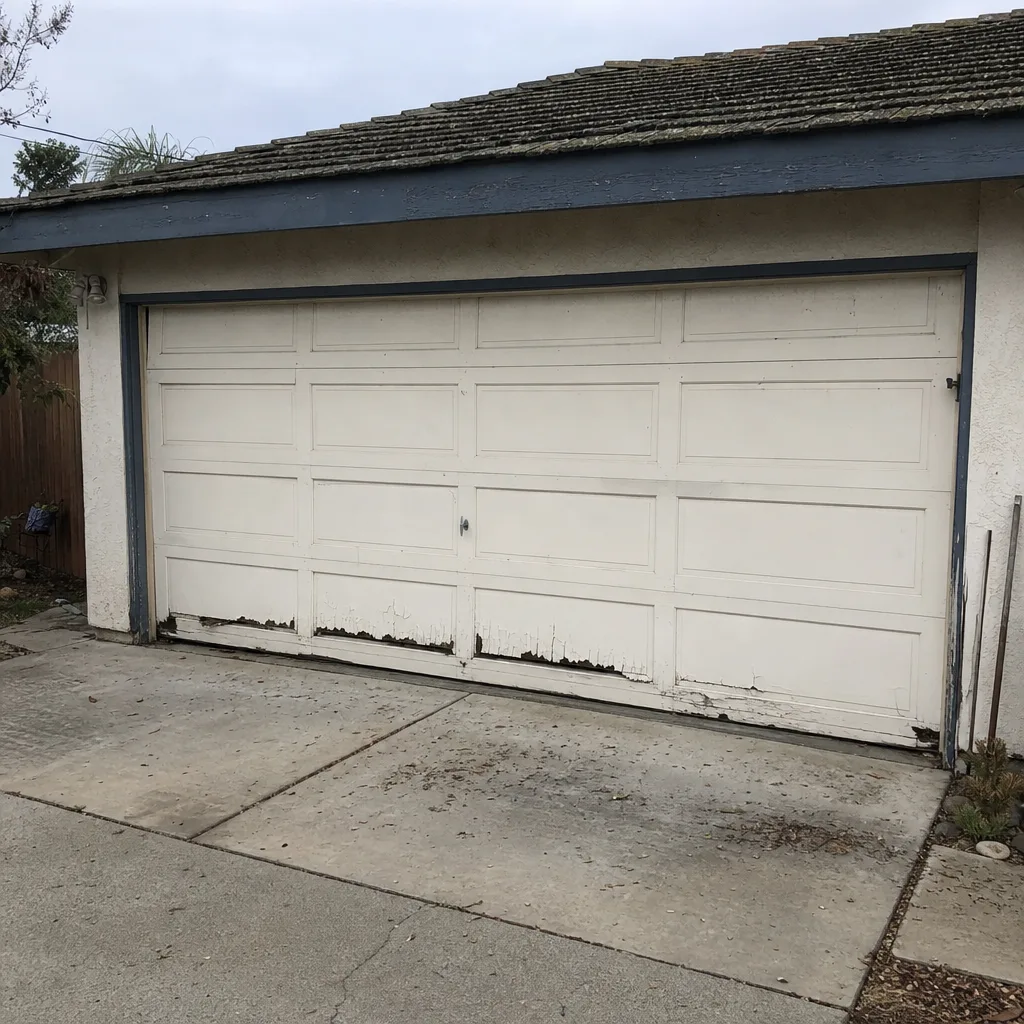 Before
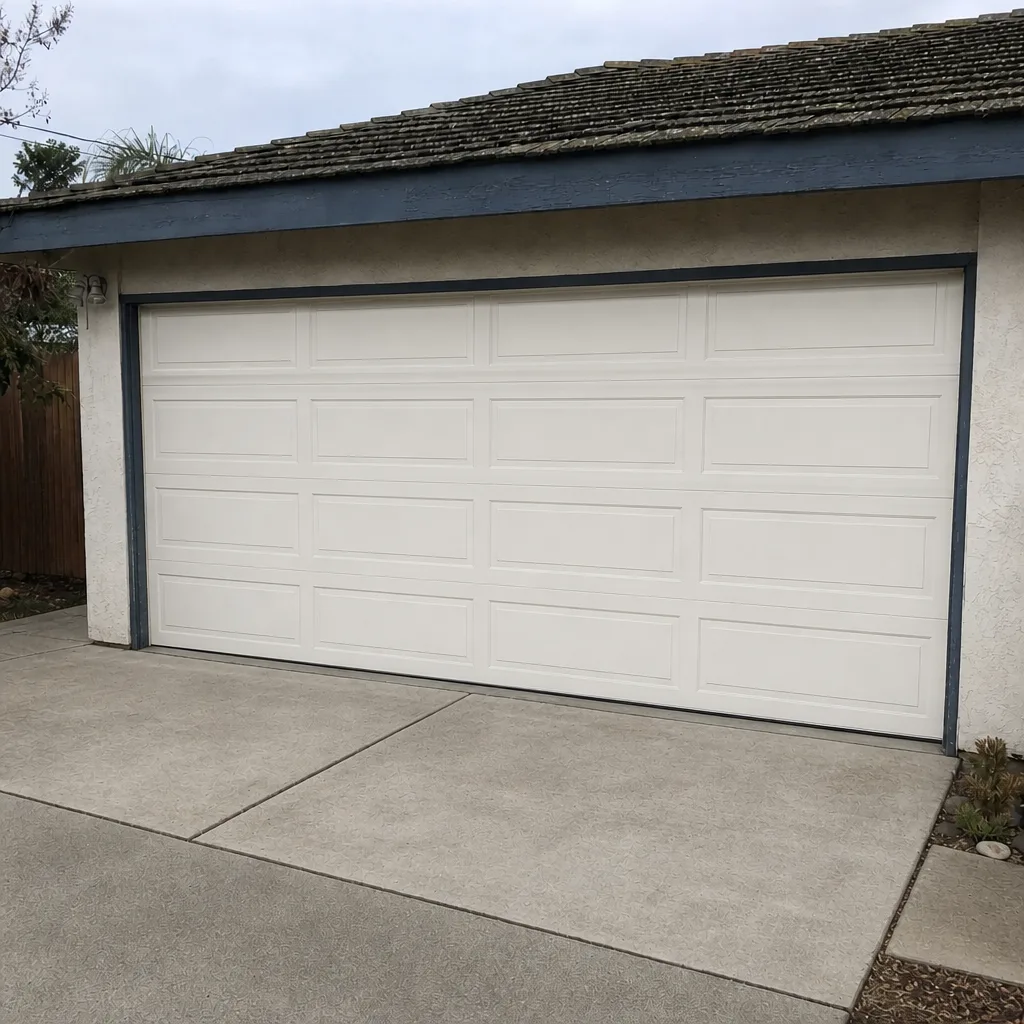 After
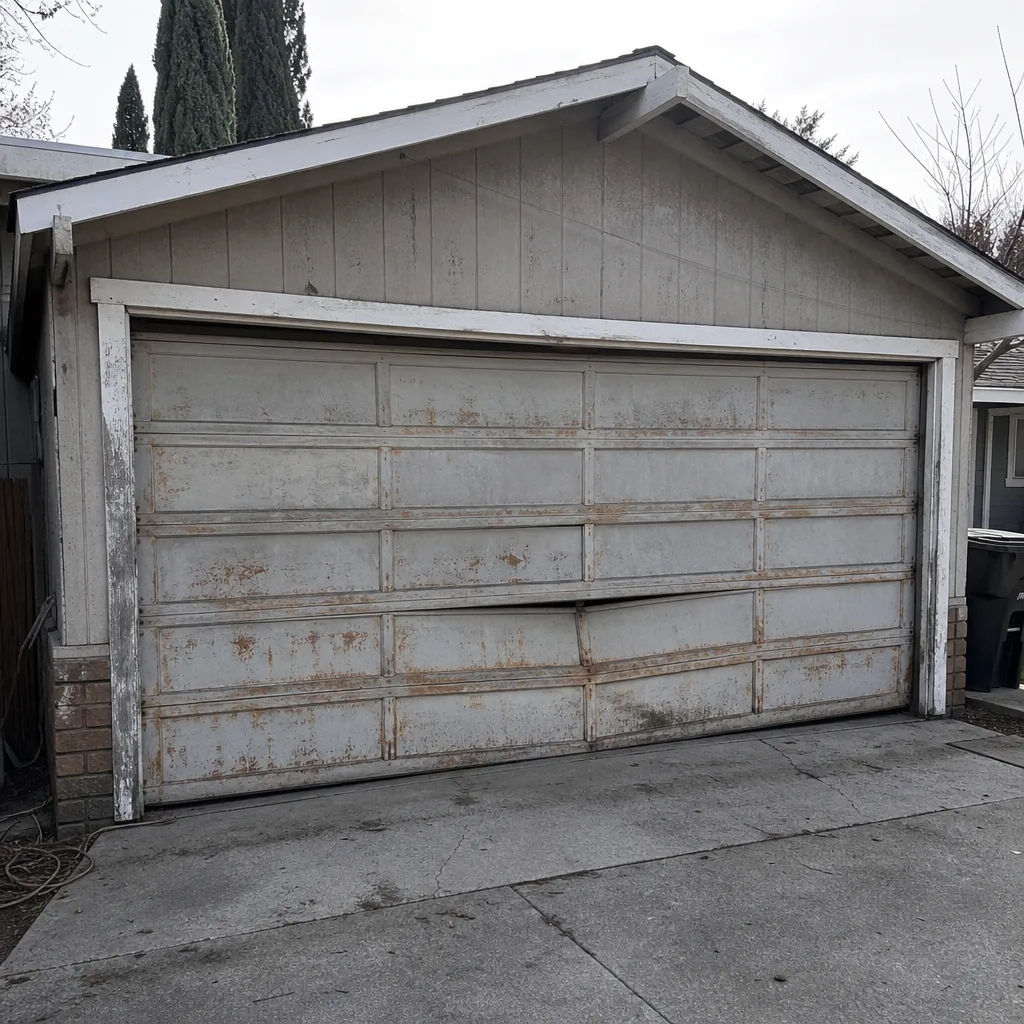 Before
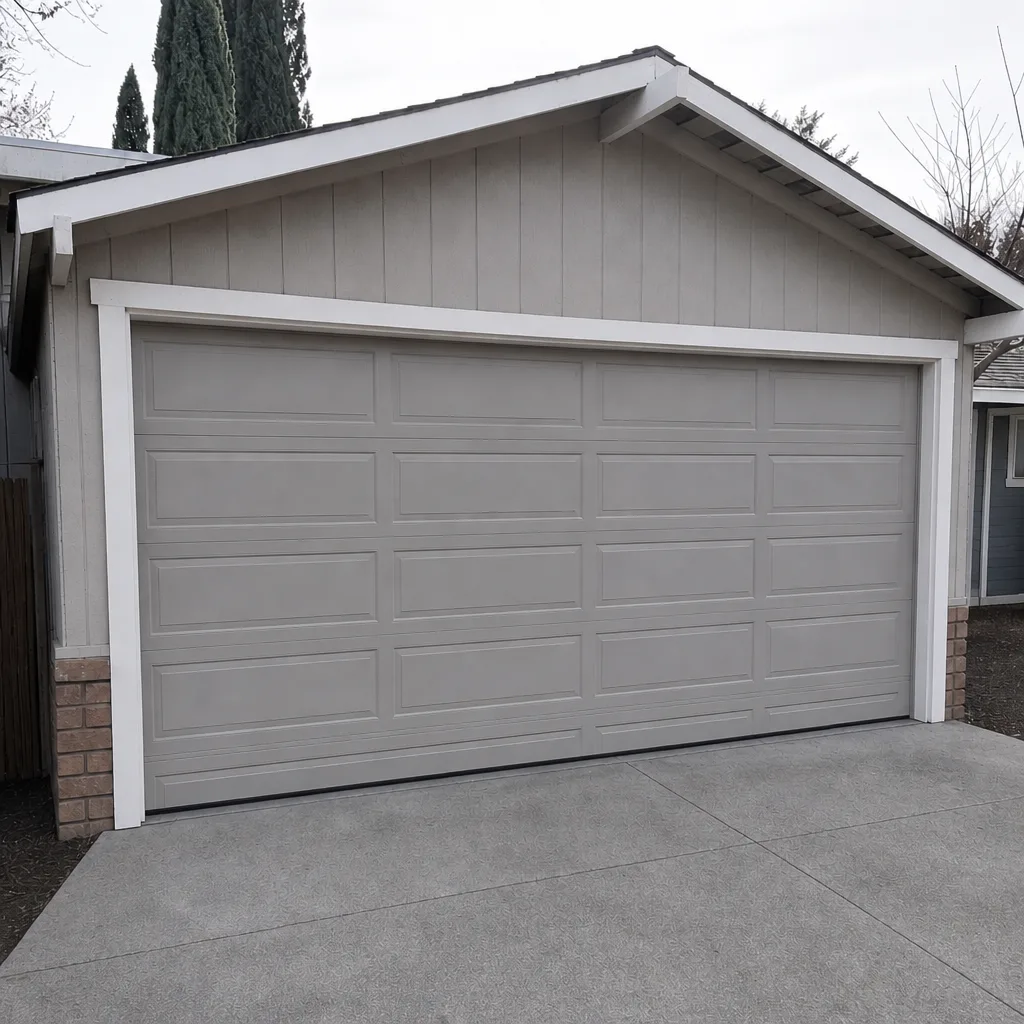 After
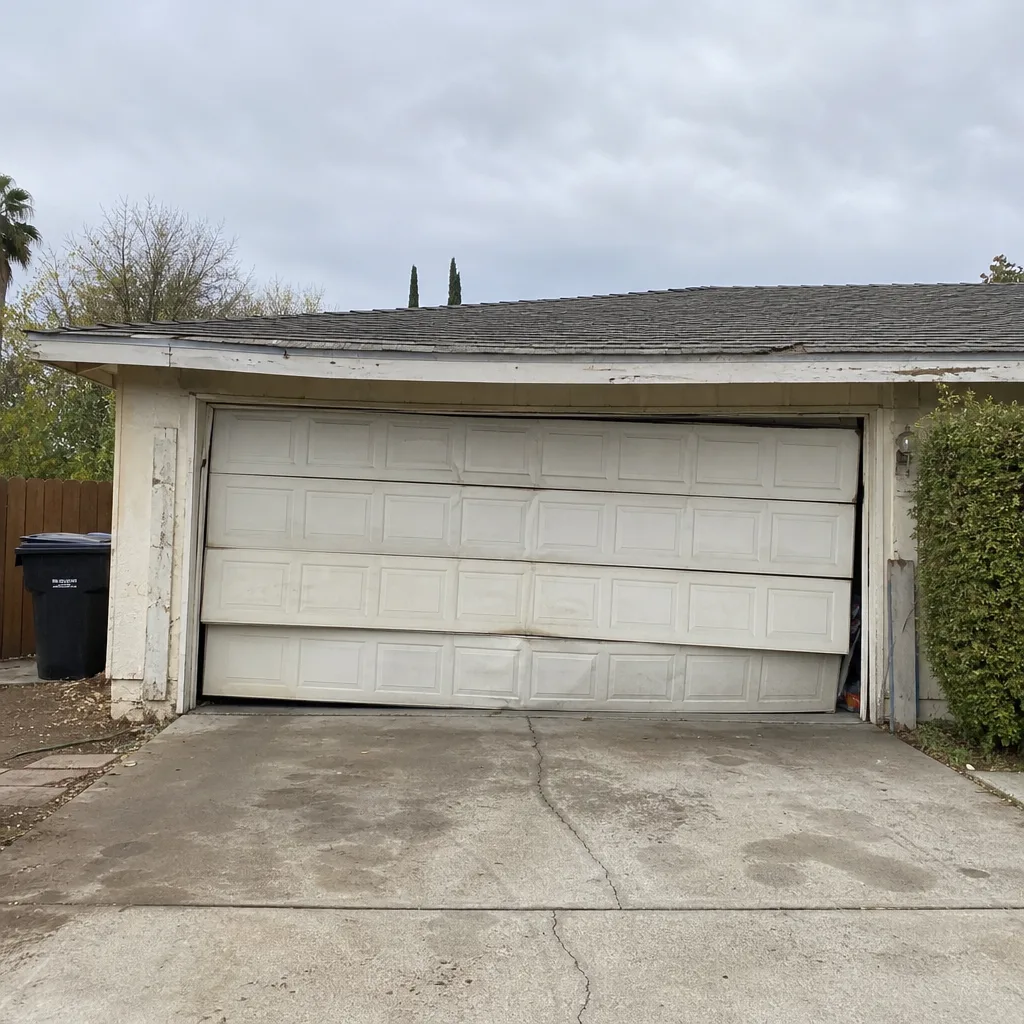 Before
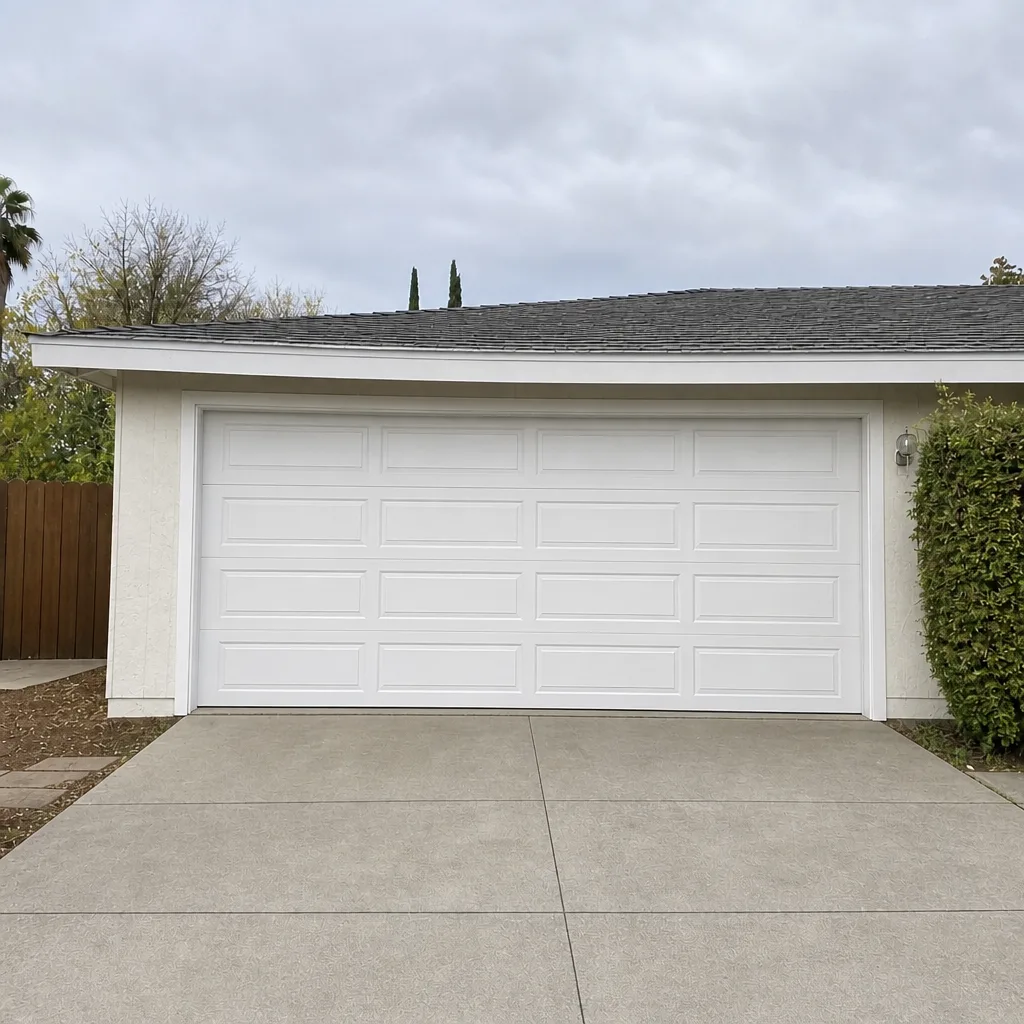 After
When to Call a Professional
Some garage door tasks are safely DIY; others are not. Lubricating hinges, wiping photo eyes, cleaning tracks, and checking seals are all homeowner-friendly. So is the balance test (disconnect the opener and lift the door halfway to see if it holds).
But spring work is a different story. Springs, cables, and the tension assembly are extremely dangerous to handle without training and proper tooling. Any adjustment or replacement there should go to a technician. Similarly, if the door is binding during a balance test, if the opener is hesitating or failing to reverse on contact, or if the door has come off one track, those are all jobs for an expert. And if the door has come completely off its track or a spring has visibly snapped, don’t use the door at all until it’s inspected.
Gallant Garage Door Repair offers free estimates in Visalia – call (877) 754-6982. We answer 24/7. Fast dispatch from 7am to 7pm, Sunday through Friday. Whether it’s a generic spring issue, a LiftMaster opener that’s not reversing, or a Clopay door that’s binding after fog season, we work on the whole system and diagnose what’s actually wrong before assuming a full replacement. Garage doors are all we do, so we do them right – and we work on the door and the opener, the whole system, in one visit. Our technicians have up to 8 years of experience across LiftMaster, Chamberlain, Genie, Clopay, Amarr, Wayne Dalton, Craftsman, and Raynor equipment.
Frequently Asked Questions
Four times a year, timed to the local climate: May before the heat peak, August during the hot season, November as fog arrives, and February in the middle of fog season. The two anchors that matter most are May (the highest-ROI window) and one mid-winter check. The 15-minute inspection in this guide covers most of the work at each of those four points. Call (877) 754-6982 for an exact quote if anything looks off.
Yes. Tule fog from November through February keeps garage hardware consistently damp, which accelerates rust on hinges and rollers and can cause condensation on cold steel panels. The bottom seal in particular takes a beating because it sits against the slab and dries out slowly. A quick wipe-down and a January or February hardware check is enough to catch most of it. Call (877) 754-6982 if you’re seeing rust spots or a bottom seal that’s already failed.
Do the pre-summer checklist in May: lubricate all moving parts, tighten visible hardware, check the balance, test the opener’s force setting, clean the motor vents, inspect the bottom seal, and touch up exterior paint. This is the single most valuable maintenance window on the calendar because it puts the door in the best position to survive the summer heat peak. Call (877) 754-6982 – estimates are free.
Yes, garage door springs are under extreme tension and can cause serious injury if handled without proper training and tooling. Any spring-level adjustment or replacement should go to a trained technician. Sight-inspecting springs for rust or visible damage is fine from the ground – but do not touch them or try to adjust them yourself. Call (877) 754-6982 if anything looks wrong.
No. The price is set per job by the written estimate, and we agree on it before any work starts. Summer heat does put more stress on springs and opener electronics, so more repair calls happen in June through August, but the estimate is based on the actual job, not the season. Call (877) 754-6982 for a free estimate.
If the door’s panels are intact and the balance is good, a repair is almost always the right call: hinge replacement, roller replacement, spring replacement, opener force adjustment. A new door makes sense when the panels themselves are failing – major dents, structural warping, or a door that’s reached the end of its service life. We diagnose before recommending anything, and we won’t push a replacement when a repair will do. Call (877) 754-6982 for a free estimate.
The Bottom Line
Visalia’s climate is closer to two extremes – summer heat and fog season – than it is to four equal seasons, and a garage door care routine that mirrors that reality will keep your door running longer than one built for a generic Midwest spring. The single highest-value task all year is May pre-summer prep: lubricate, tighten, test balance, check opener force, and clean the motor vents. The second-highest is a mid-winter hardware check, timed between fog cycles in January or February, with a wipe-down of the bottom seal and photo-eye lenses. Combine those two anchors with a 15-minute walk-through in August and November, avoid the common mistakes in this guide, and let a technician handle anything spring-related. That’s the calendar that keeps a door in this valley closing reliably for years.
If you’re not sure where your door stands heading into the next season, that’s what we’re here for. We work on the door and the opener – the whole system, one visit. Call (877) 754-6982. We answer 24/7. Fast dispatch from 7am to 7pm, Sunday through Friday. Estimates are free, and the price is quoted and agreed before any work starts.
Written by the team at Gallant Garage Door Repair.