
Last updated November 14, 2026
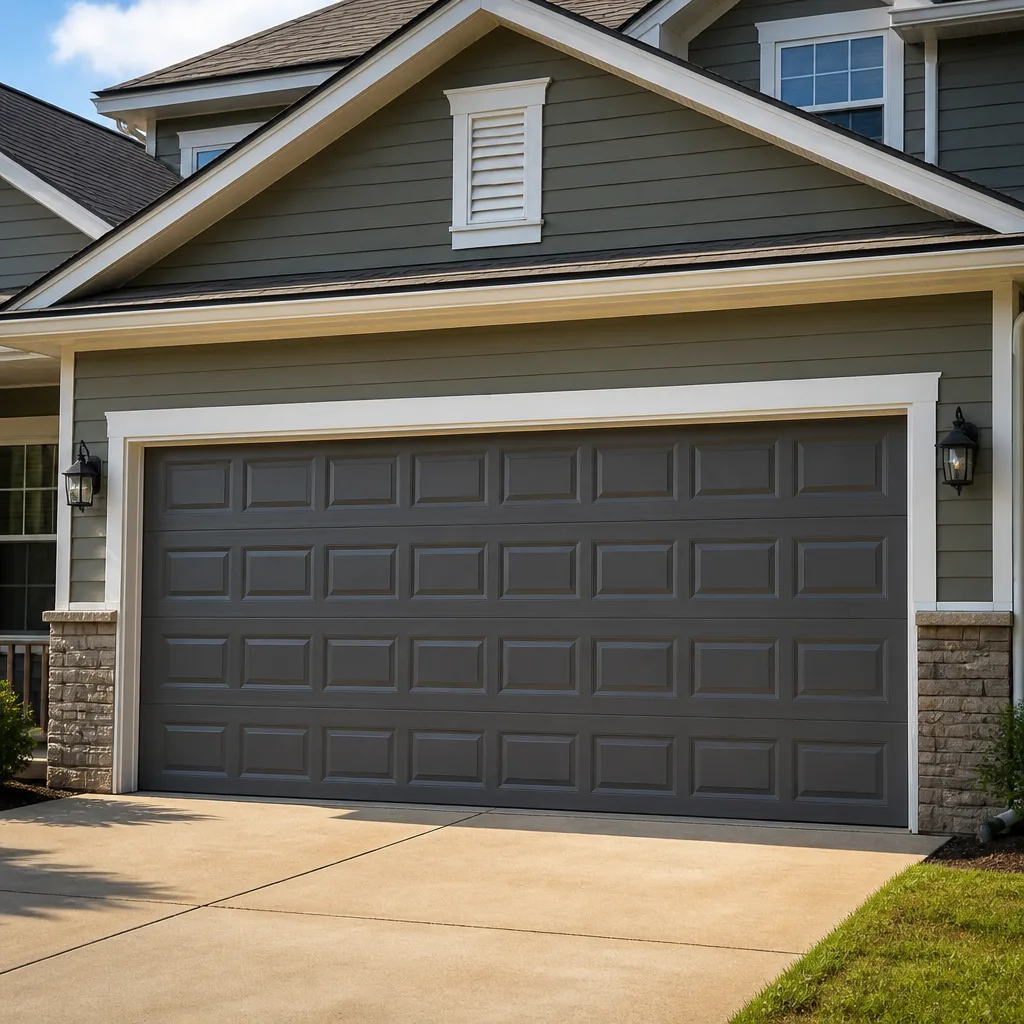 Raised-panel steel
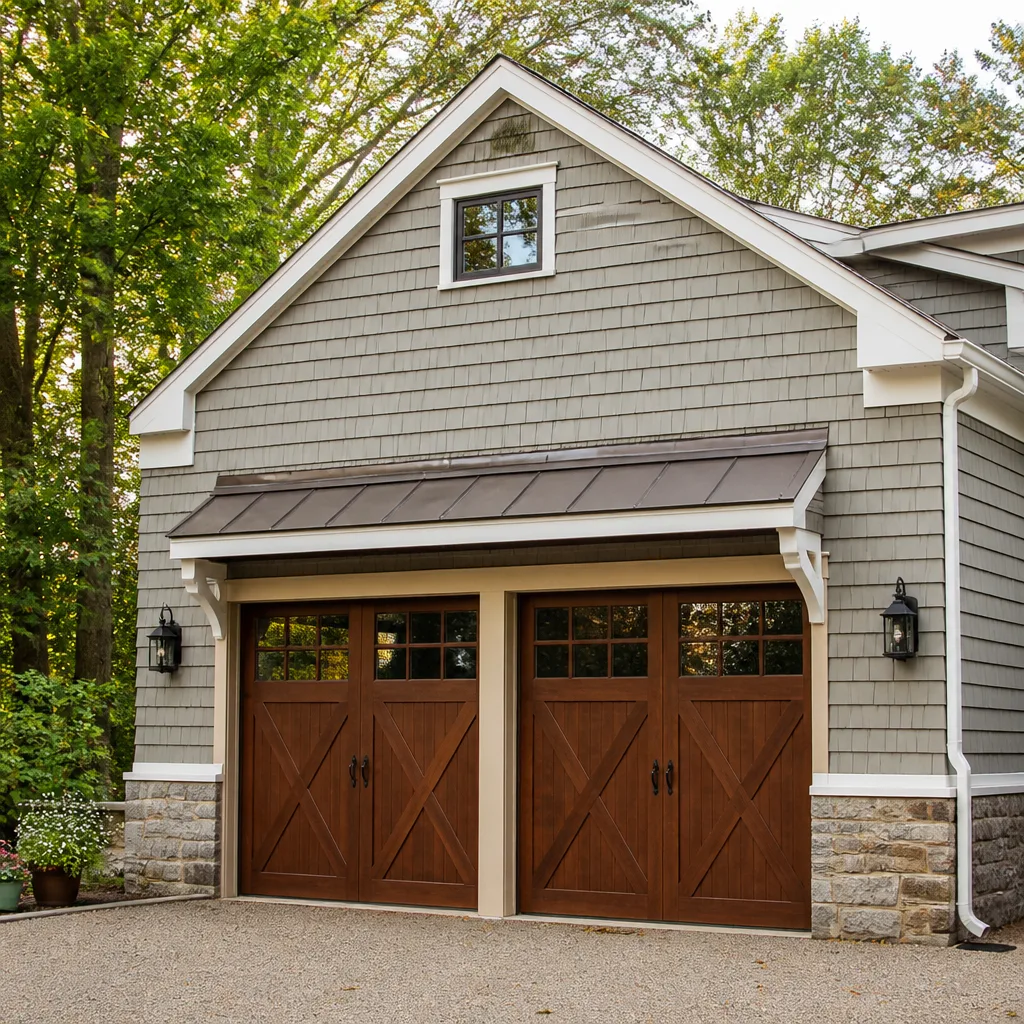 Carriage house
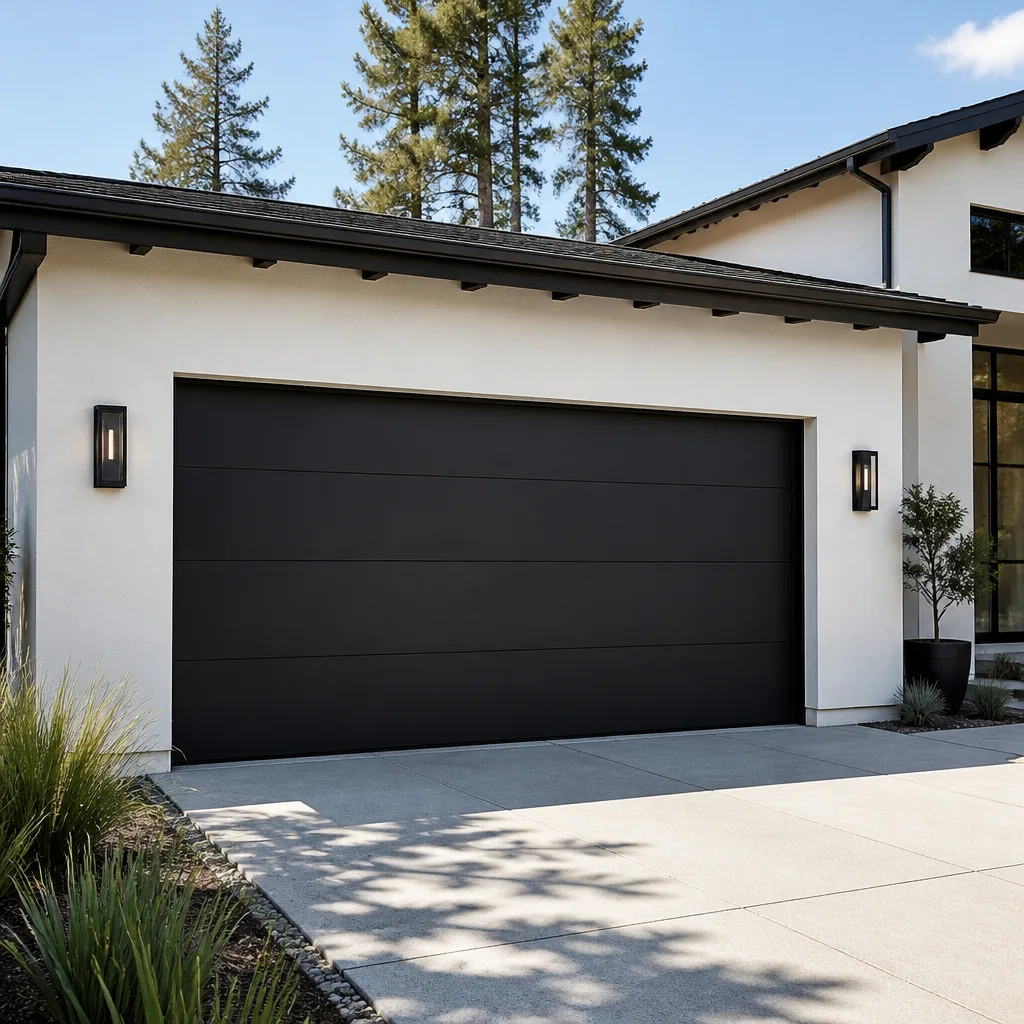 Modern flush
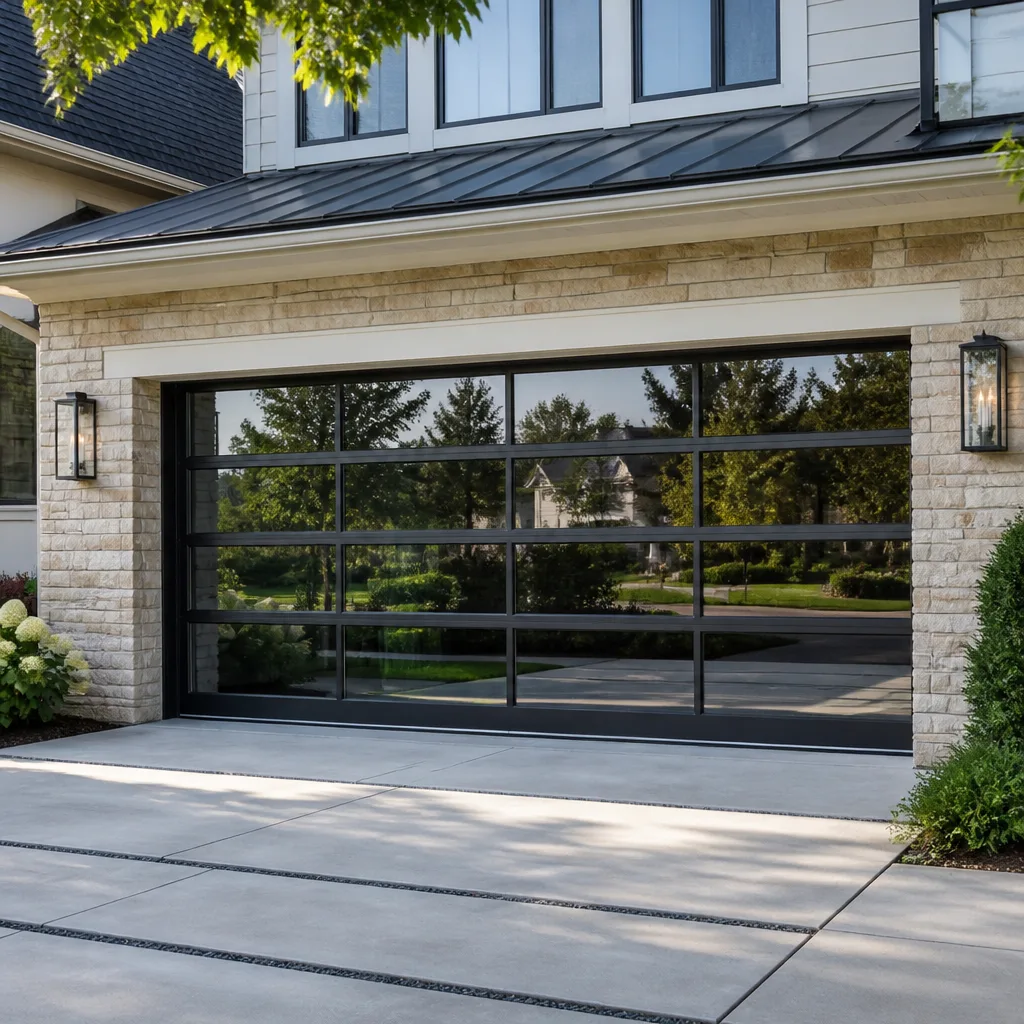 Full-view glass
 LiftMaster openers
 Chamberlain openers
Full 25-point door and opener safety check with every visit - springs, cables, rollers, tracks, and your LiftMaster or Chamberlain opener included
You get a price before we start. It does not change when the pro arrives.
Get your free estimateThe Complete Guide to Garage Doors in Visalia
Most garage door buying guides are written for a country that doesn’t exist here. They talk about snow loads, road salt, and coastal humidity, and then they tell you to pick a door based on color swatches. Visalia doesn’t work that way. Here, the garage door faces months of dry heat that can push an uninsulated steel panel past 150°F on a July afternoon, then swings between cool nights and hot days for the rest of the year. That range does things to adhesives, seals, and steel that a photo in a catalog won’t show you. This guide covers what actually matters for a garage door in Visalia: how the Valley climate wears hardware, which door constructions make sense for the heat, how local architecture shapes the choice, and what a real installation project looks like from permit to final test.
Quick Answer
A garage door in Visalia should be chosen for heat and dust resistance, not just curb appeal. Insulated steel is the practical default for most homes because it holds up to Valley heat, deadens noise, and resists panel warping. Ranch, Spanish-style, and newer subdivision homes each push the style in different directions, and the opener, hardware, and warranty terms deserve as much attention as the door itself. Budget for a free in-person measure before committing, because door sizing and track clearance vary more than most homeowners expect.
Styles & brands we work with
- Raised-panel steel
- Carriage house
- Modern flush
- Full-view glass
- LiftMaster openers
- Chamberlain openers
Table of Contents
- Why the San Joaquin Valley climate changes how garage doors wear
- Which door construction actually makes sense for Visalia
- Matching door profiles to Visalia architecture
- Choosing and maintaining the opener
- What a full door project involves in Visalia
- Cross-referencing manufacturer warranties against Valley conditions
- A simple maintenance routine for the Valley
- Repair or replace: how to decide
Why the San Joaquin Valley climate changes how garage doors wear
A garage door in coastal California lives in a climate that punishes metal with moisture. A garage door in Visalia lives in one that punishes it with heat and dust. Those are different failure modes, and they show up in different places on the door.
Heat is the first factor. The sun hits a west- or south-facing garage door for hours each afternoon through the summer, and the panel surface absorbs it. An uninsulated steel door has nothing between the sun and the inside face, so it heats all the way through and then cools overnight. That daily expansion and contraction is gentle compared to a real freeze-thaw cycle, but it repeats for months. Over a few seasons, the adhesive that bonds the outer skin to the internal structure of a low-grade panel can start to let go. You see it as a bubble or a ripple that catches the light at an angle. The panel isn’t necessarily failing structurally, but it’s a sign the door wasn’t built for this much heat cycling.
Agricultural dust is the second factor. The Valley is a working agricultural region, and airborne dust settles on every horizontal surface, including the top of the door, the tracks, and the rollers. Dust mixed with the light lubricant that keeps hinges and rollers moving turns into a gritty paste. That paste wears the rollers faster and makes the door bind. In our experience, doors here need a clean-and-lube routine more often than doors in cleaner air, because the dust doesn’t just sit on top; the opener pulls it back into the track with every cycle.
Here’s what the combination means in practice:
- Rollers wear faster. Grit embeds in nylon rollers and grinds the track.
- Seals dry out. The rubber weather seal along the bottom and sides hardens and cracks in the summer heat.
- Adhesives age. Panel skins and insulation can separate on cheap construction.
- Openers run hotter. An opener motor working in a garage that holds heat for the whole afternoon works harder to shed its own heat.
None of this is a reason to panic. It’s a reason to buy the right door and to keep up with lubrication. A garage door in Visalia that gets cleaned and lubed twice a year will outlast an ignored one by a wide margin.
Which door construction actually makes sense for Visalia
Walk into any door showroom and you’ll see wood overlay, carriage-house steel, full-view aluminum, vinyl, and a dozen hybrids. Some are engineered for this climate. Others are pure aesthetics dressed up as construction.
Insulated steel: the practical default
For most Visalia homes, insulated steel is the honest recommendation. The steel skin stands up to the sun, the insulated core slows heat transfer into the garage, and the door is quieter and stronger than a single-sheet non-insulated panel. A garage attached to the house benefits most, because the garage door is a large shared wall surface. Makers like Clopay, Amarr, and Wayne Dalton all build insulated steel lines, and the differences between them come down to panel gauge, insulation type, and hardware quality rather than to whether the concept works. It does.
Carriage-house steel: style without the wood problem
Carriage-house doors mimic the swing-out look of old wooden barn doors, but the good ones are stamped steel with a decorative surface. That matters in Visalia. Real wood doors look warm, but wood in this heat dries, checks, and needs regular refinishing. A steel carriage-house door gives you the look with a surface that tolerates the sun. If you want the style, ask for a steel construction and check that the faux hardware is bolted on rather than glued; glue lets go in the heat.
Aluminum and full-view: where they belong and where they don’t
Full-view aluminum doors with glass panels look sharp on modern homes, and the aluminum resists rust. But aluminum is thin and dents easily, and unshaded glass filters a lot of heat into the garage. They work well on the front of a house that gets shade in the afternoon. On a west-facing wall in full sun, they can make the garage unpleasant. Choose them for the look, not because they’re cooler.
Non-insulated steel: the false economy
A non-insulated single-layer steel door is the cheapest option on the showroom floor, and in Visalia it’s the one most likely to ripple, drum loudly when it opens, and pass heat straight through to the garage. It’s fine on a detached shed or a work garage that doesn’t share a wall with the house. For an attached garage, spend the difference on insulation.
Matching door profiles to Visalia architecture
Visalia’s housing stock runs across a few distinct styles, and each one favors a different door profile. Getting this right matters more than most homeowners think, because the garage door is often a third of the front elevation of the house.
Ranch homes
Ranch homes dominate older Visalia neighborhoods, and they usually have wide, low garage openings that sit close to the front roofline. Traditional raised-panel steel in a low-profile stamp works well here. Long horizontal panels echo the low roof, and a panel with a window row near the top breaks up the weight of a wide door. A high-arched carriage-house style can look cramped on a low ranch opening, so it’s worth seeing the profile on the house before ordering.
Spanish-style facades
Homes with stucco walls, clay tile roofs, and arched entries have a strong architectural line. A plain raised-panel door can look like it belongs to a different house. Carriage-house doors with a subtle arch or a recessed panel often fit better, and hardware in dark iron tones matches the window details. If the entry is arched and the garage opening is square, keep the door panels square; forcing an arch where there isn’t one looks fussy.
Newer subdivisions in northwest Visalia
The newer subdivisions northwest of the city tend to run toward farmhouse and modern-craftsman styles: varied rooflines, mixed materials, and taller garage openings. Here a carriage-house door with crossbuck detail or a clean modern panel with a full-width window row reads correctly. The taller openings on these homes make arched panels work, unlike on the older ranches. One thing to watch: some subdivisions have recorded design guidelines, so check with the HOA or the city’s planning department before you order a door style the neighborhood hasn’t approved.
If you’re not sure which direction fits, spend ten minutes walking the block. Look at what the houses with the same roofline and stucco as yours have chosen, and notice which doors look like they were bought at random. Style consistency across a street is a real thing, and the door that fits the house also protects resale.
Choosing and maintaining the opener
The door is half the system. The opener is the other half, and it takes a different kind of wear in the Valley heat. A motor in a garage that reaches high temperatures through the afternoon works harder to shed its own waste heat, and a dusty environment packs grit into the drive and the safety sensors.
Most homes here run one of the well-known opener brands, and recognizing yours helps when it’s time for repair. LiftMaster and Chamberlain are everywhere, and the two are close cousins under shared engineering. Craftsman units from older homes are still going strong. Genie units are common, and Raynor door-and-opener combinations show up on some installs. Knowing your unit matters because opener problems are often model-specific: a failing logic board on one brand looks nothing like a strained gear assembly on another, and the fix lives in different parts.
What to look for in a replacement opener
- Belt drive if noise matters. A belt-drive unit runs quietly, which matters most on an attached garage beside a bedroom.
- Battery backup if you count on the door. A dead opener means a door you can’t move without pulling the release, so backup power is worth the small upcharge.
- Built-in safety reversal and a working sensor pair. Every opener should reverse when it meets an object, and the sensors near the floor should be aligned and clean.
- Smart capability if you want it. Most current openers connect to a phone app. It’s a convenience, not a requirement, so don’t overspend on features you won’t use.
Maintenance on the opener is mostly about dust. Wipe the drive housing, keep the sensor lenses clear, and check that the safety reversal works every few months. If the opener grinds, hesitates, or won’t respond to the remote, that’s the time to call garage door opener repair rather than keep forcing a tired motor. A straining opener drags on a door that isn’t balanced, and the two problems feed each other.
What a full door project involves in Visalia
A new door is a project, not a purchase, and homeowners who treat it like a purchase get surprised. Here’s the honest sequence, and it looks the same whether you choose Wayne Dalton, Clopay, Amarr, or Raynor.
- Free in-person measure. A real measurement includes the opening width and height, the rough opening behind it, the headroom above the door, and the space on each side for the track. Doors are ordered to measure; a guess is a returned door.
- Written estimate. You receive a written quote that sets the price before any work starts. This quote should name the door model, the opener if one is included, and whether old-door disposal is covered.
- Check the permit rule with the city. Most cities require a permit for garage door replacement, and the rule varies about whether replacing the same size door needs one. Ask the City of Visalia building department before you schedule. This is not a step to skip.
- Order the door. Once the style, color, and model are confirmed, the door is ordered. Delivery lead time varies by manufacturer and finish, so it’s part of the schedule.
- Schedule the install. A standard single door install runs a few hours, and a double door runs longer. Expect the old door removed, springs and torsion hardware set, tracks and rollers installed, and the opener mounted and tested.
- Final test and walk-through. The installer should test the balance, the safety reversal, the sensor alignment, and the seal against the floor, and show you how it all works before leaving.
The timetable from first call to finished door is usually driven by the door order, not the install. That’s why a free measure and a written price come first: you get a real number and a real date instead of a guess. If you’d rather understand how a repair or replacement reads before you commit, the garage door repair side of our work covers what happens when a door needs hardware instead of a whole panel.
Cross-referencing manufacturer warranties against Valley conditions
Every door manufacturer prints a warranty, and almost nobody reads it before signing. In Visalia, that’s a mistake. Warranty coverage is written for climate and use conditions, and the terms differ in ways that matter here.
- Check whether the warranty covers heat-related panel issues. Some terms exclude cosmetic separation or warping from environmental causes unless the door was installed to spec. An insulated, properly installed door holds up better, and the documentation matters if a claim comes up.
- Check the finish warranty separately from the structure warranty. Paint and finish fade in strong UV, and finish terms are usually separate from structural coverage. A door that fades is a different claim than a door that fails.
- Check who honors the install warranty. Door manufacturers typically cover the product, and the installer covers the work. Read both, because a strange sound or a binding door after install is usually an installation issue, not a manufacturer defect.
- Check the opener warranty independent of the door. Openers from LiftMaster, Chamberlain, Genie, and Craftsman carry their own terms, often longer on the motor than on the accessories.
- Ask about required maintenance. Some warranties require proof of routine lubrication or service. A simple record of your twice-a-year cleaning is cheap insurance.
None of this is about finding a loophole. It’s about choosing a door construction that matches the climate so the warranty never comes into question. When a manufacturer’s terms and a Valley summer run into each other, the insulated steel door with documented installation wins every time.
A simple maintenance routine for the Valley
Two short sessions a year does most of the work. Here’s what we tell homeowners to check, in the order it matters.
- Clean the tracks and rollers. Wipe the tracks with a cloth, then apply a light garage-door lubricant to the hinges and rollers. Don’t use heavy grease; it traps dust.
- Check the balance. Release the opener and lift the door halfway by hand. It should stay where you put it. A door that falls on its own has a spring or cable problem, and that’s a stop-and-call situation.
- Test the safety reversal. Put a small object in the door’s path and run it closed. It should reverse. If not, the sensors or the opener need attention.
- Inspect the weather seal. The rubber strip along the bottom hardens in the heat. Replace it when it cracks or stops sealing.
- Look at the springs and cables, but don’t touch them. Torsion springs above the door are under enormous tension. A spring or cable can cause serious injury even when the door looks still. If a spring snaps, a door hangs crooked, or a cable goes slack, stay back and call a trained professional. Never try to loosen or adjust springs yourself.
Anything beyond cleaning, lubrication, and a light visual check belongs with a technician. The one thing we won’t compromise on is safety around the spring hardware: a garage door in Visalia is a heavy mechanical system, and someone who isn’t trained shouldn’t be unscrewing tension hardware.
Repair or replace: how to decide
The instinct when a door misbehaves is to replace it. Often the honest answer is a repair. A door that scrapes, thumps, or won’t close fully usually has a fixable hardware problem: a worn roller, a bent track, a snapped spring, a failing opener. Those are repairs, and we cover them under garage door repair.
Replacement earns its cost in a few situations:
- The panel skin is separating and the door was cheaply built for a cooler climate.
- The door is out of style with the house and the neighborhood, and resale value matters.
- The springs and hardware are worn out at the same time as the panels, so the repair cost approaches the cost of a new insulated door.
- You want insulation for a garage attached to the house, and adding it isn’t practical to an old door.
A specialist who works only on garage doors can tell the difference quickly, because the diagnosis is the job. We work on the whole system, so an opener problem that looks like a door problem gets caught before anyone quotes a new door.
Common Mistakes to Avoid
- Buying a non-insulated door for an attached garage. It seems cheaper, but it passes Valley heat straight through, runs louder, and ages faster. The difference pays for itself in comfort and life span.
- Skipping the in-person measure. A door ordered from a phone call often comes back wrong, and the return and reorder eat any savings. Get the door measured before ordering.
- Ignoring the permit question with the city. Rules vary and change, so call the City of Visalia building department and ask about your specific replacement before scheduling.
- Not reading the manufacturer’s warranty before you buy. Climate terms and finish exclusions hide in the fine print. Read the terms first, then choose the door construction.
- Letting dust build up on tracks and rollers. Valley dust turns lubricant into grit. Clean and lube twice a year and you avoid the grinding that leads to early repairs.
- Trying to adjust springs or cables yourself. High-tension hardware can hurt you badly even when the door is at rest. Stay back and call a trained professional.
- Choosing a door style without looking at the street. Ranch, Spanish-style, and newer subdivision homes all favor different profiles. Ten minutes of looking at your block saves a reorder.
See the difference
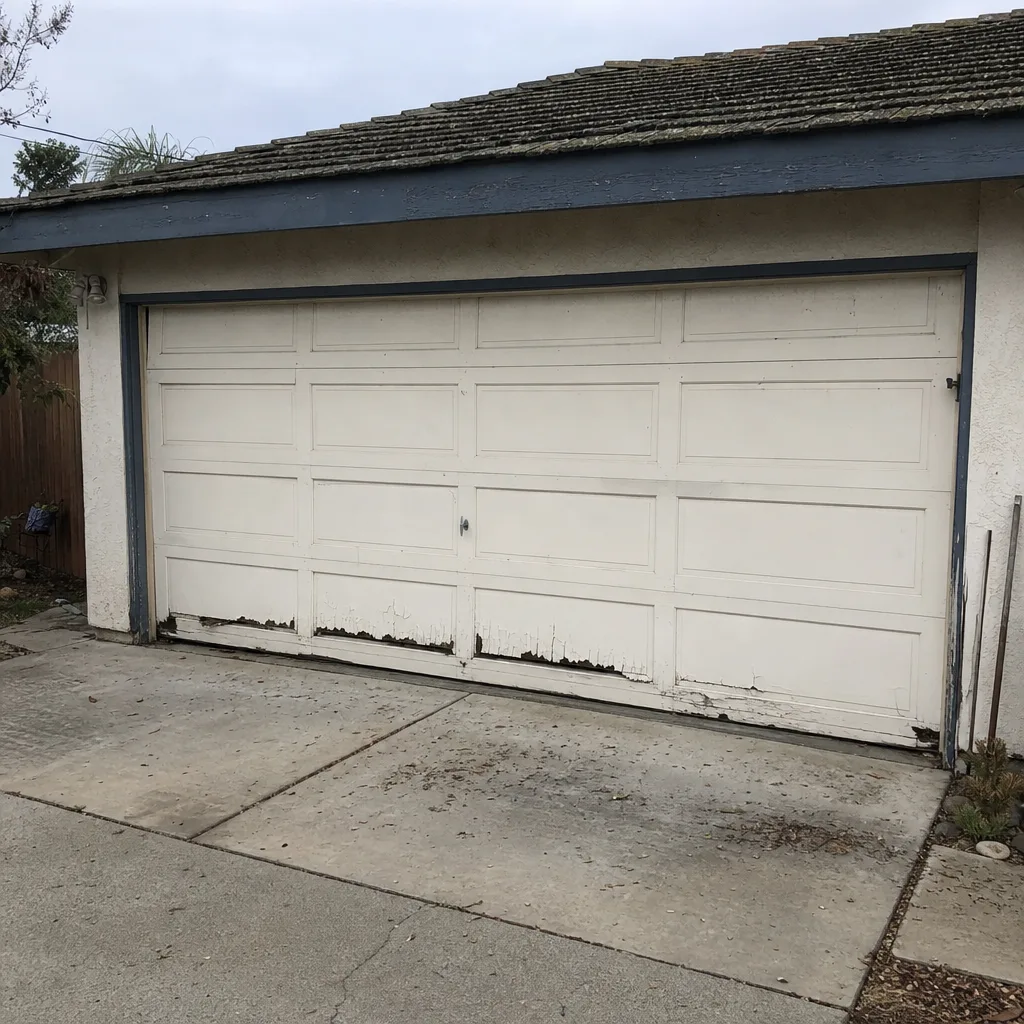 Before
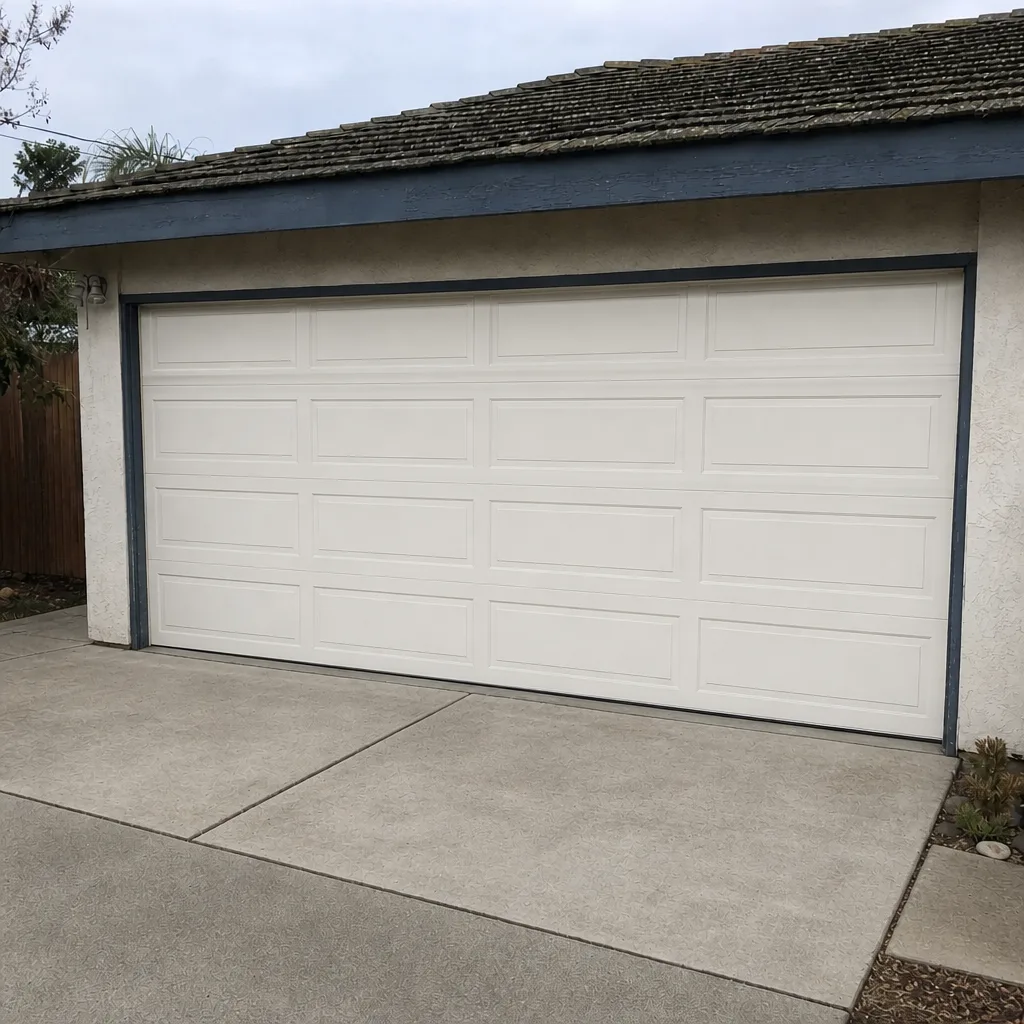 After
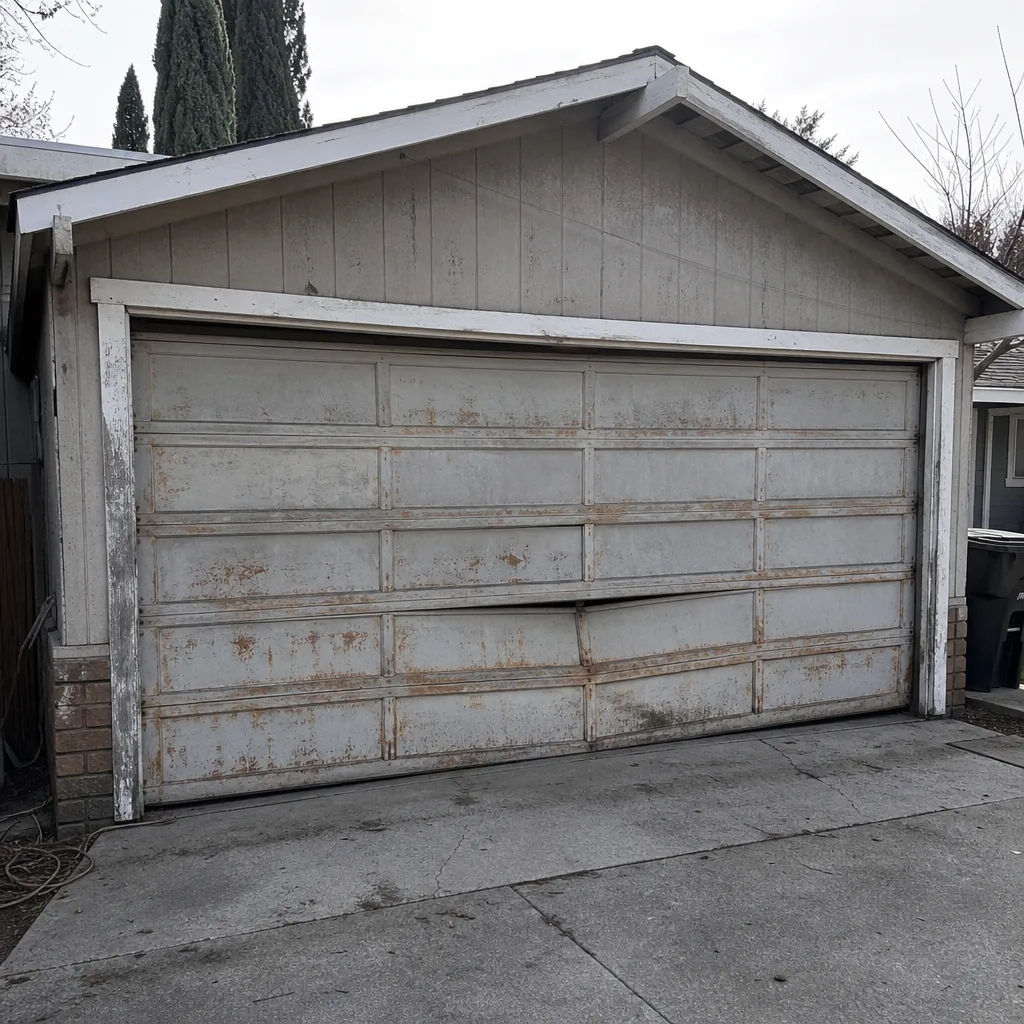 Before
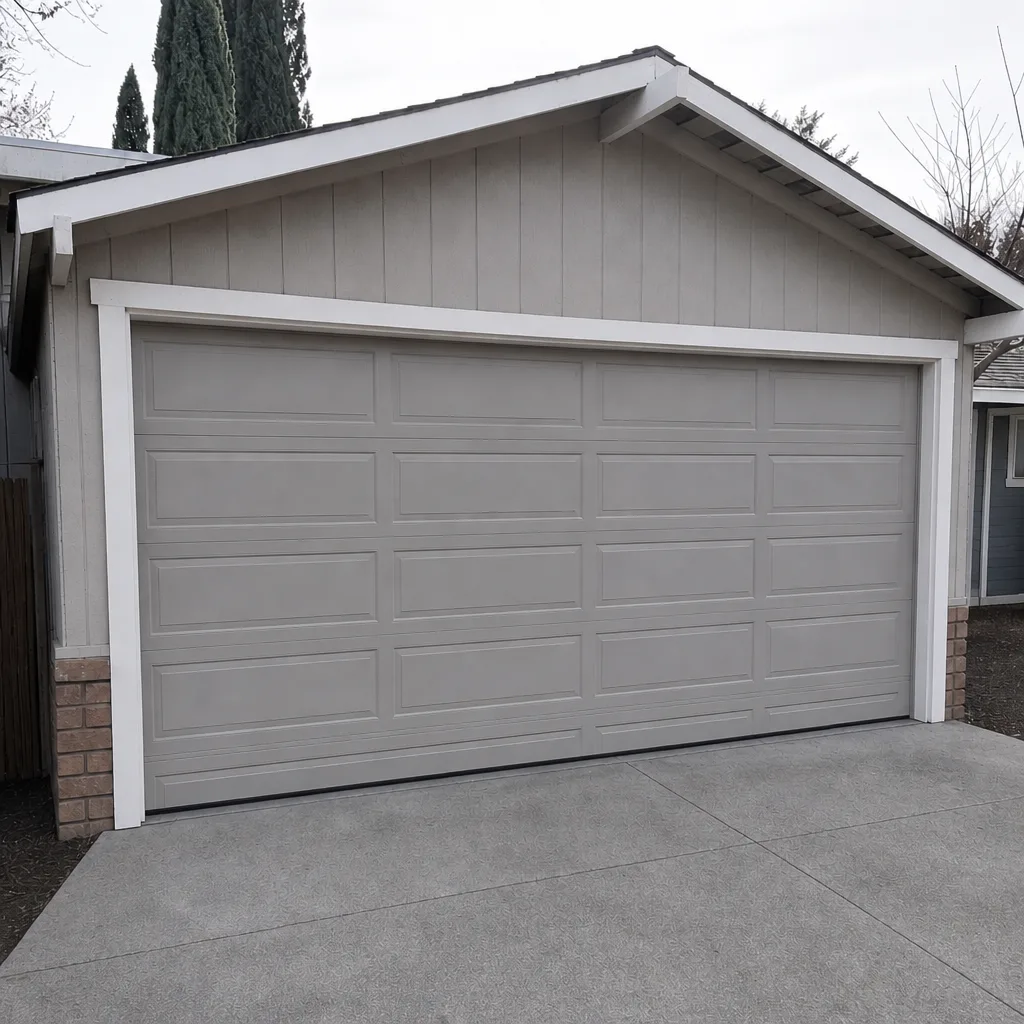 After
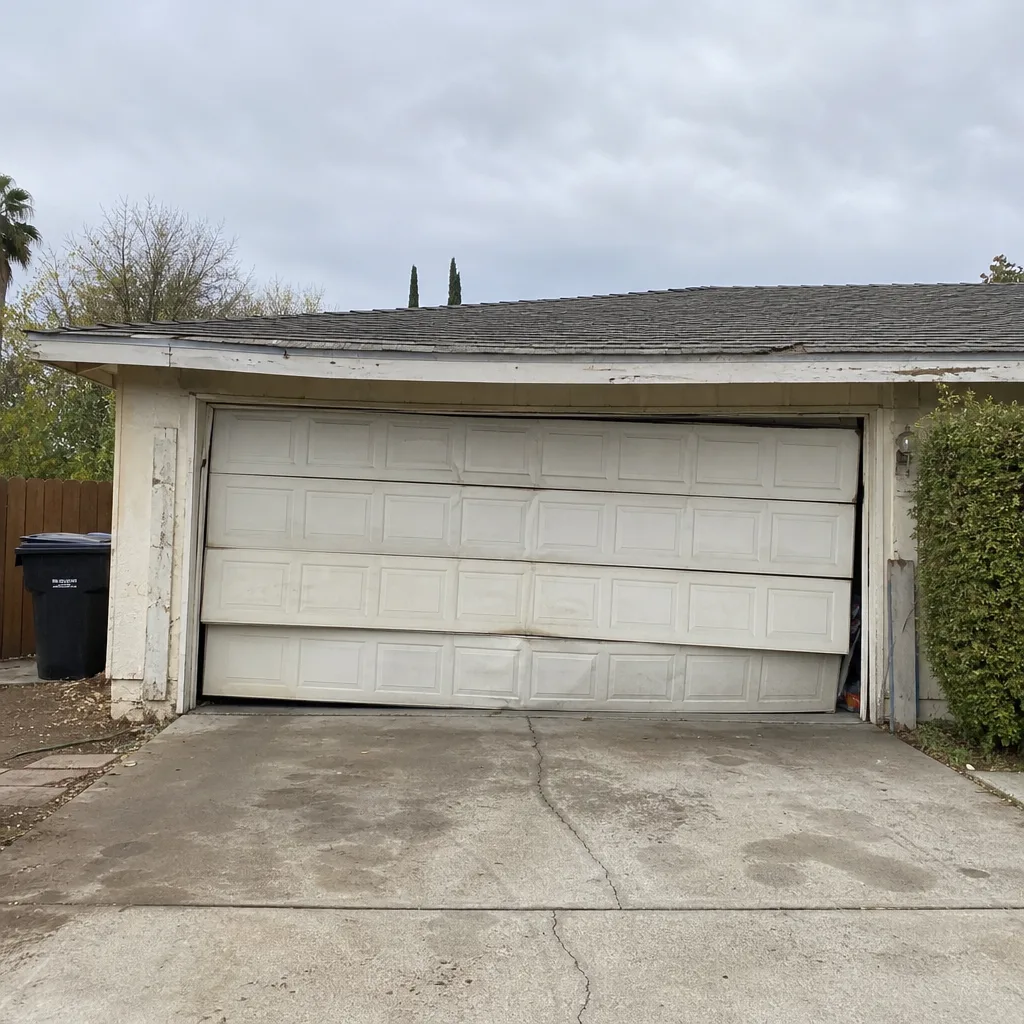 Before
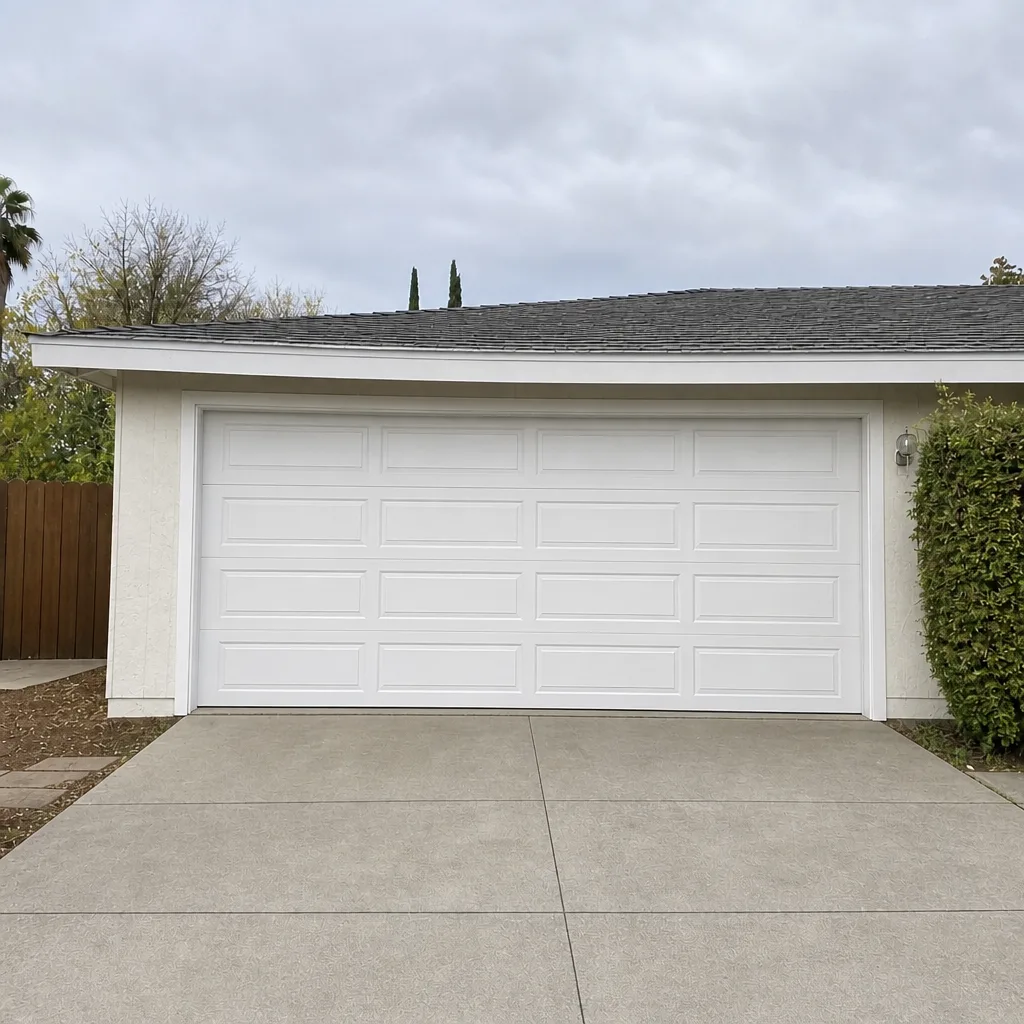 After
When to Call a Professional
Call us when the door won’t open, opens crooked, or closes on its own without warning. Call when the opener grinds, hesitates, or goes dead. Call when a spring snaps, a cable goes slack, or the door hangs unevenly, and don’t touch the tension hardware. Call when the bottom seal is failing and the door lets in heat and dust, or when damage from a storm impact needs a look. Call before you order a new door, so the measure and the written price come from someone who does this every day. Gallant Garage Door Repair offers free estimates in Visalia – call (877) 754-6982. We answer 24/7. Fast dispatch from 7am to 7pm, Sunday through Friday. Our technicians have up to 8 years of experience, and we work the door and the opener as one system so a single visit resolves the whole problem.
Frequently Asked Questions
Insulated steel is the best choice for most Visalia homes because it holds up to the Valley heat, resists panel warping, and keeps a garage attached to the house cooler. Carriage-house steel gives you the decorative look without the refinishing that real wood needs. Non-insulated steel and full-view aluminum make more sense on shaded or detached garages than on a west-facing attached one.
Ask the City of Visalia building department, because the rule depends on your project and changes over time. Replacing a door with the same size and type sometimes needs no permit, and adding a new opening or changing the structure almost always does. Call before you order and before you schedule, and keep the answer with your project records.
Twice a year is a good default for Visalia because agricultural dust and summer heat wear the hardware faster than in cleaner air. Clean the tracks, lubricate the hinges and rollers, and test the safety reversal each time. Have a technician do a full inspection once a year if the door gets heavy use or faces full afternoon sun.
Heat expands metal and softens rubber seals, and dust turns the lubricant to grit, so the whole system moves with more noise in July than in January. A belt-drive opener and a clean, lubricated track reduce most of it. If the noise is a grinding or thumping rather than a hum, get it checked before a small issue becomes a roller or spring repair.
Life span depends far more on construction and maintenance than on the calendar. An insulated steel door that’s cleaned and lubricated twice a year lasts considerably longer than a cheap non-insulated panel that’s ignored, and the difference shows up as rippled skins and failing hardware in the heat. Proper installation matters too, so a written estimate from a specialist is worth the free measure.
We don’t recommend it, mainly because of the spring tension. Torsion springs on a garage door are under enormous load, and even a door at rest can injure someone who isn’t trained on the hardware. The install also involves track alignment, balance, and safety reversal, and a mistake there shows up as a door that won’t close right or a motor that burns out.
The Bottom Line
Visalia isn’t a placeholder on a buying guide, and its climate shouldn’t be either. The Valley heat, agricultural dust, and mix of ranch, Spanish-style, and newer subdivision homes all push the decision toward insulated steel, careful installation, and a twice-yearly cleaning routine. Read the warranty before you buy, call the city about the permit, and get an in-person measure before you order. If a door or an opener is already misbehaving, diagnose before replacing, and stay back from the tension hardware. Gallant Garage Door Repair is a specialist shop covering the whole system, from the door panel and hardware to the opener and drive, and we’re brand-fluent across the equipment most Visalia homes already have. Call (877) 754-6982 for a free estimate. We answer 24/7. Fast dispatch from 7am to 7pm, Sunday through Friday.
Written by the team at Gallant Garage Door Repair.