
Last updated November 14, 2026
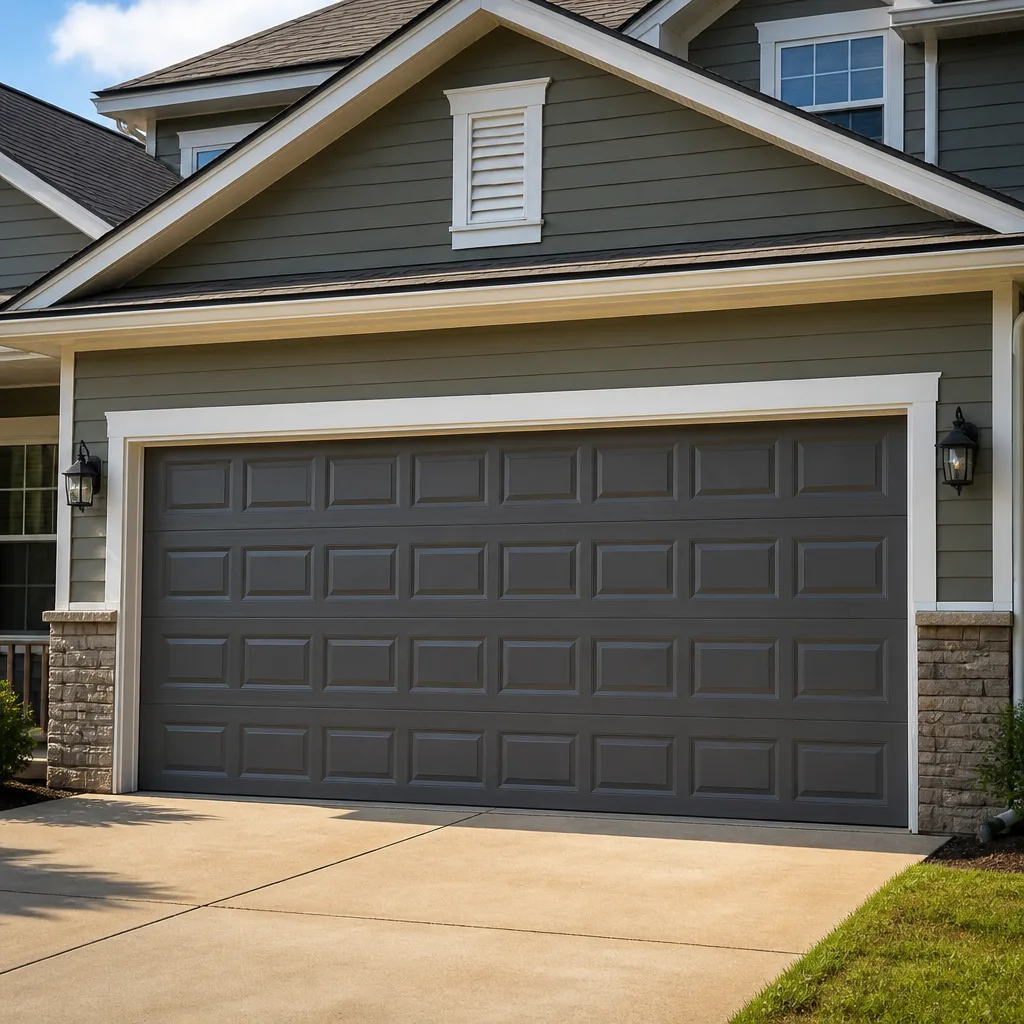 Raised-panel steel
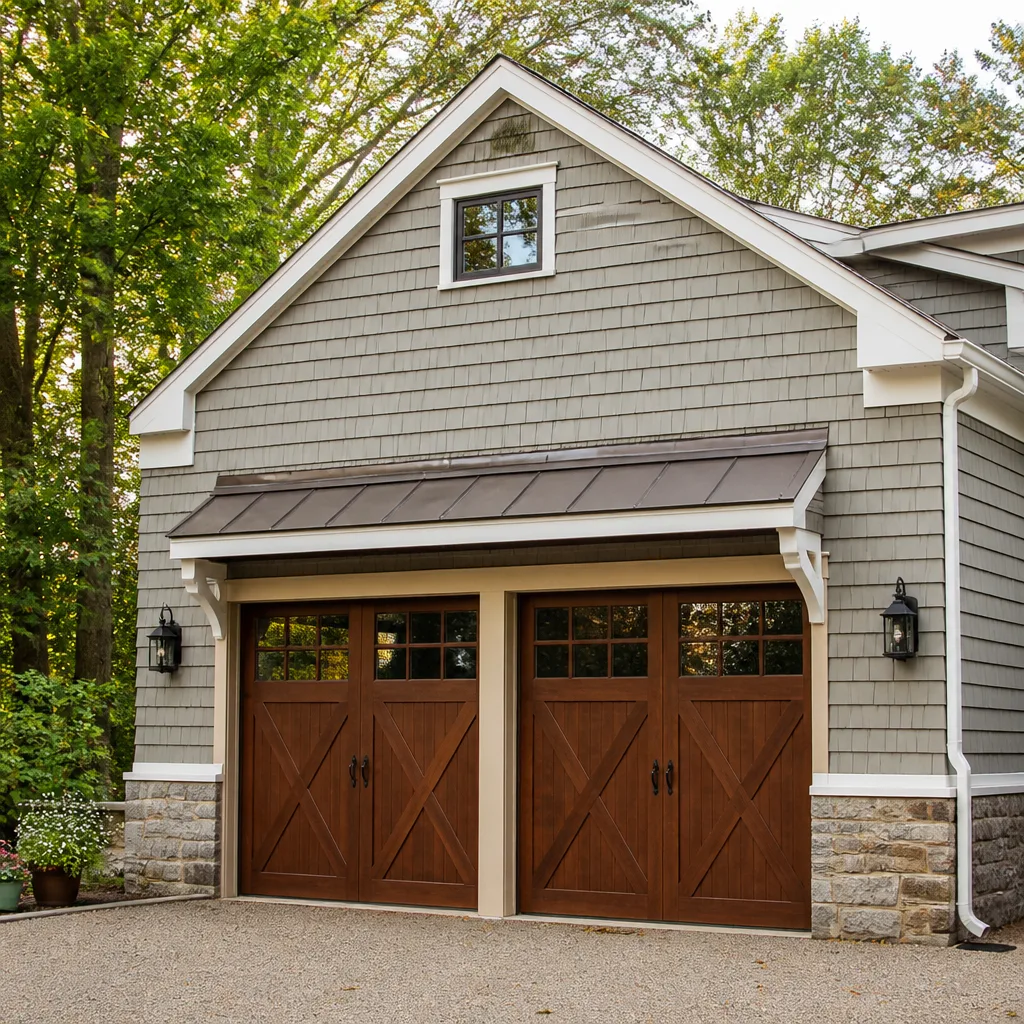 Carriage house
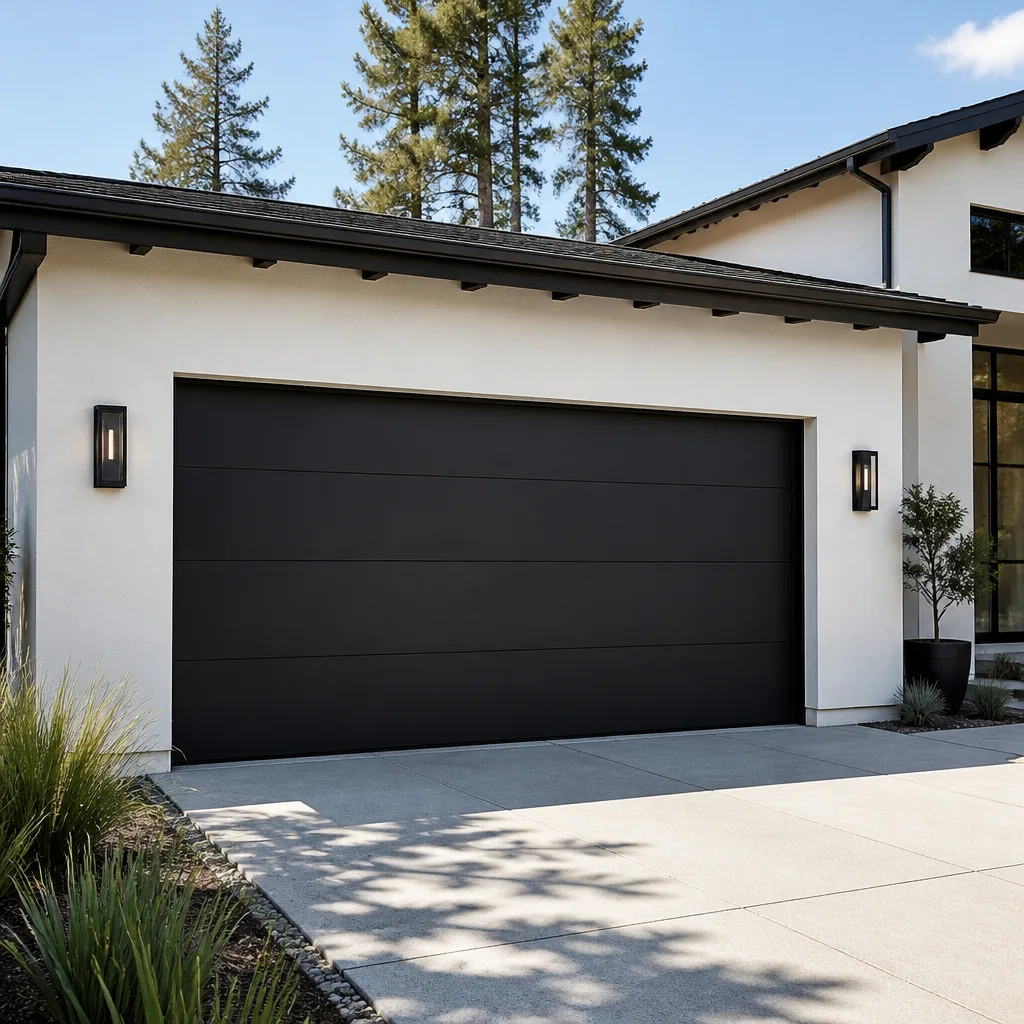 Modern flush
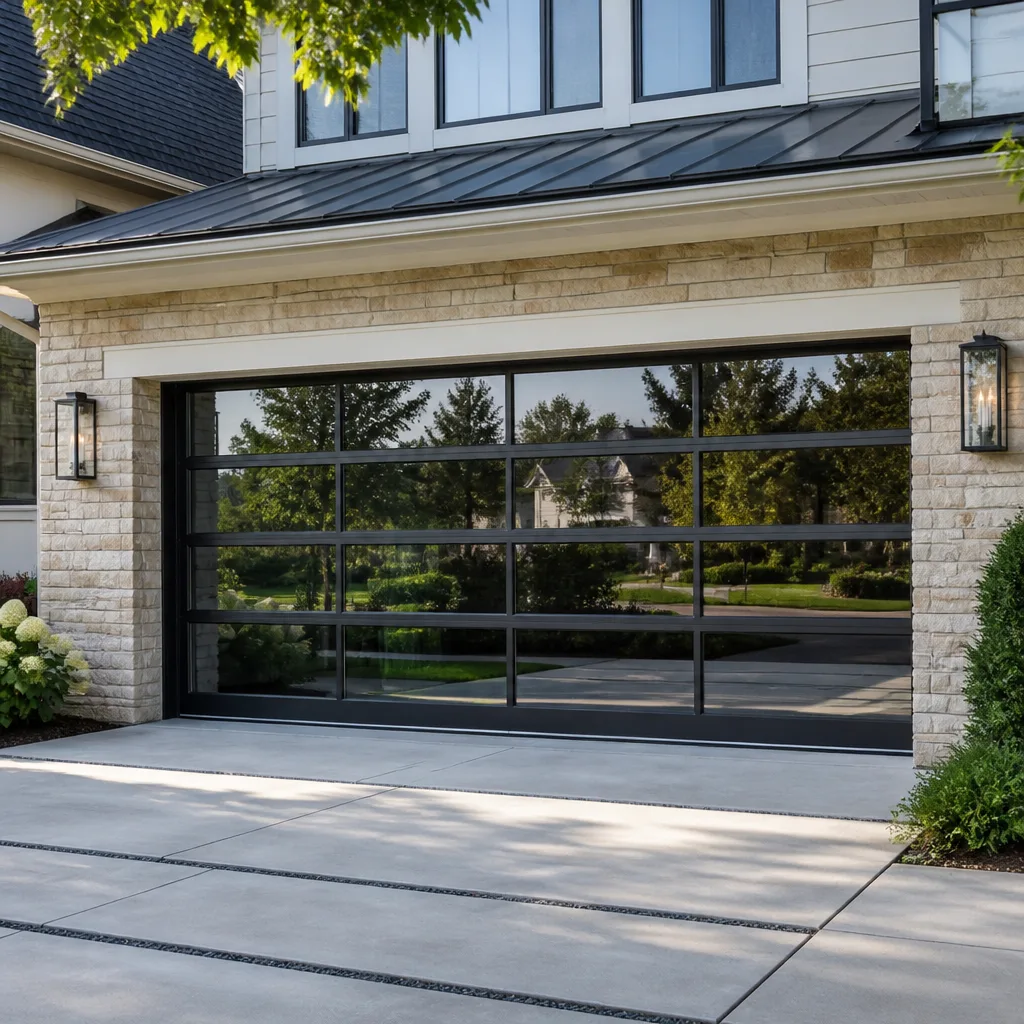 Full-view glass
 LiftMaster openers
 Chamberlain openers
Full 25-point door and opener safety check with every visit - springs, cables, rollers, tracks, and your LiftMaster or Chamberlain opener included
You get a price before we start. It does not change when the pro arrives.
Get your free estimateGarage Door Repair Troubleshooting in Visalia: Common Problems and How to Fix Them
A door that reverses before it closes is almost never a sensor problem. Yet the sensors are the first thing most homeowners replace, and the second, and sometimes the third. The real cause usually sits a few feet above your head in the torsion system, where spring tension has drifted just enough to unbalance the door and trip the safety reverse. Replacing sensors fixes nothing while the actual failure keeps wearing. This guide teaches you to read your door like a specialist reads it: start at the source, not the surface. You’ll learn how to tell a spring failure from a cable problem from a track misalignment using only your eyes and ears, what’s safe to touch, what isn’t, and how the Central Valley heat shapes nearly every failure we see in Visalia.
Quick Answer
Most garage door problems in Visalia trace back to one of three sources: worn torsion or extension springs, a cable that has jumped its drum, or an opener limit switch knocked out of calibration by heat-driven expansion. You can identify which one you’re dealing with by watching the door’s first two feet of travel and listening for where the sound originates. Torsion springs and cable drums are genuinely dangerous and should only be handled by a trained technician. Everything below the door panel itself – rollers, hinges, weatherstripping, sensor alignment – is fair game for a careful homeowner.
Styles & brands we work with
- Raised-panel steel
- Carriage house
- Modern flush
- Full-view glass
- LiftMaster openers
- Chamberlain openers
Table of Contents
- Read the System, Not the Symptom
- Distinguishing Springs, Cables, and Tracks Using Only Cues
- 60-Second Test: Is It the Door or the Opener?
- How Central Valley Heat Accelerates Failure
- Which Repairs Are Safe and Which Ones Aren’t
- Symptom-to-Cause Reference Table
- What a Typical Repair Walk-Through Looks Like
- Keeping a Visalia Door Healthy Between Repairs
Read the System, Not the Symptom
A garage door is a balancing act. The springs lift the door’s weight, the cables carry that tension to the drums, the tracks guide the rollers, and the opener simply nudges the whole thing along. When something goes wrong, the symptom appears at the end of that chain – the door shakes, the opener grinds, the reverse trips. The cause is almost always earlier in the chain.
Homeowners in Visalia tend to fix the symptom because it’s visible. A door that won’t close looks like a sensor problem, so the sensors get replaced. But a door that reverses repeatedly is telling you the opener’s force sensing is detecting resistance it shouldn’t. That resistance could be a failing spring, a bent track, a worn roller, or a misaligned limit switch. Replacing the sensor removes a component that wasn’t causing the problem while the real failure keeps working toward a bigger breakdown.
Reading the system means asking three questions in order:
- Can the door be lifted by hand with the opener disconnected? If it’s heavy, the spring has lost tension. If it’s light, the spring is still doing its job.
- Does the door travel evenly, or does one side lag? Uneven travel points to a cable or drum issue.
- Does the sound come from the door frame or from the opener unit itself? That single distinction separates door-side from opener-side repair.
In our experience across Visalia, homeowners who can answer those three questions accurately save themselves the cost of two or three unnecessary part swaps before they reach the actual failure. It isn’t about doing the repair yourself – it’s about knowing what you’re describing when you call.
Distinguishing Springs, Cables, and Tracks Using Only Cues
You don’t need tools to identify which of the three main hardware failures you’re looking at. You need a flashlight, a few minutes of silence, and a willingness to look up rather than at the door.
Spring failure
Look at the torsion spring – the horizontal coil mounted above the door on the header. A healthy spring has a visible gap between each coil. A broken spring shows an obvious split, usually at one end, with the coils bunched tightly on one side. Extension springs, mounted above the horizontal tracks on either side, simply snap in half with a visible gap. The audio cue is a bang you don’t forget. The visual cue afterward is a door that feels impossibly heavy when lifted by hand.
Cable problem
Cables run from the bottom corners of the door up to the drums at each end of the torsion tube. A cable that has come off its drum looks slack or has visibly overlapped the drum edge. You might see fraying near the loop end. The audio cue is a scraping or popping sound as the door travels, and the visual cue on the door itself is a gap at one bottom corner – one side of the door sits higher than the other when partly open. A snapped cable usually makes the door drop unevenly and jam within the first foot of travel.
Track misalignment
Tracks are the metal rails on each side. Stand back and sight down each one as though you were checking a picture frame for level. A bent track has an obvious kink or curve. The audio cue is a rhythmic clunk every few inches of travel, matching the spacing of your rollers. You’ll also see the door shift sideways as it moves, and the roller on the affected side may pop out of the track channel.
These three failures produce different sounds, different visual evidence, and different symptoms on the door. Once you can name the one you’re seeing, you’ve already done the diagnosis half of the job. Calling Gallant Garage Door Repair with that information means the technician arrives knowing the likely fix instead of starting from scratch.
60-Second Test: Is It the Door or the Opener?
This is the single most useful test a homeowner can perform, and it takes under a minute. It tells you whether you need garage door repair or a visit focused on the opener, and it saves you from being sold the wrong service.
- Pull the red emergency release handle. This disconnects the opener’s carriage from the door. The door should now move freely by hand.
- Lift the door halfway by hand. A well-balanced door stays where you put it. A door that falls back down or rises on its own has a spring or balance problem – that’s door-side.
- Press the wall button with the door disconnected. Watch and listen to the opener’s rail and carriage. If the carriage travels smoothly along the rail but the door doesn’t move, the opener is healthy and the door is the problem.
- Reconnect the door and press the button again. If the door now grinds, shakes, or reverses, you’ve confirmed a door-side mechanical resistance that’s tripping the opener’s safety sensing.
If the carriage itself won’t travel – dead silence, a hum without movement, or a grinding noise from inside the motor housing – you have an opener problem, not a door problem. That’s the moment to call for garage door opener repair rather than door hardware work. Opener failures are common across every drive type, from a belt-drive Genie to a chain-drive LiftMaster, and the symptom pattern looks nearly identical regardless of the brand.
One caution: never pull the emergency release while the door is up and the spring is broken. A door with no spring tension can slam down hard. If you already know the spring is broken, don’t run this test – call for service instead.
How Central Valley Heat Accelerates Failure
Visalia summers push garage interiors well above the outdoor temperature, and that heat does specific things to a garage door system that homeowners in cooler climates never deal with. Understanding those heat effects is the difference between catching a failure early and finding it in the middle of a hot afternoon.
Weatherstripping wears faster than you’d expect
The rubber or vinyl seal along the bottom of the door and around the frame takes the brunt of the valley heat. It hardens, cracks, and loses its flexibility, then starts leaving gaps. Those gaps let in dust, insects, and the summer heat itself, which raises the garage temperature further. Once the seal is compromised it doesn’t recover – it needs replacement. It’s one of the most affordable repairs and one of the most neglected.
Limit switches drift out of calibration
Openers set their open and close limits mechanically or electronically, and the metal and plastic components holding those settings expand and contract with daily temperature swings. In Visalia, where the swing between a cool morning and a hot afternoon can be significant, an opener’s close limit can drift until the door stops short of the ground or tries to travel past it and reverses. The fix is a limit adjustment, not a new opener. Homeowners who replace a working opener because it “stopped closing right” are usually spending far more than necessary.
Lubrication dries out
Heat evaporates the lubricant on rollers, hinges, and the torsion tube faster here than in milder climates. Dry rollers create the grinding noise that gets blamed on the opener. A proper lubrication routine in late spring goes a long way toward keeping the door quiet through summer.
Panel warping and wood swelling
Steel and aluminum doors handle the heat better than wood, but even steel panels can bow slightly when one side gets more sun than the other. Wood-framed garage openings can swell enough to bind a door that used to close cleanly. If your door worked fine in spring and sticks now, suspect heat-related movement before you suspect a mechanical failure.
None of these are reasons to panic. They’re the predictable patterns that let a Visalia homeowner plan ahead – replace the weatherstripping before summer, lubricate in late spring, and check the limit settings once the season turns.
Which Repairs Are Safe and Which Ones Aren’t
We’d rather tell you this plainly than hedge. Some garage door repairs are within reach of a careful homeowner with a screwdriver. Others carry real injury risk and belong with a trained technician every time. Painting them all as “call a pro” wastes your money on the easy ones. Painting them all as DIY puts you in the hospital on the hard ones.
Safe enough to handle yourself
- Weatherstripping replacement. Bottom seals and frame seals pull out and slide in with basic tools. No stored energy involved.
- Sensor alignment. The two safety sensors at the bottom corners of the opening need to be aimed at each other. A small adjustment usually resolves a misalignment that keeps the door from closing.
- Lubrication. Rollers, hinges, and the torsion tube benefit from a proper garage door lubricant applied a few times a year.
- Roller replacement. With the door fully down and the opener disconnected, rollers can be swapped with a wrench. Do this one roller at a time and never with the door raised.
- Light bulb and battery replacement. Opener bulbs and remote batteries are the simplest fixes in the system.
- Visual inspection. Checking for frayed cables, worn rollers, and loose hinges costs nothing and catches problems early.
Genuinely dangerous – call a technician
- Torsion springs. The horizontal spring above the door holds enough stored energy to cause serious injury in an instant. There is no safe DIY method to replace one, and no clamp or winding tool sold online changes that. This is the single most dangerous component in the entire system.
- Extension springs. Lighter than torsion springs but still under heavy load. The same caution applies.
- Cable replacement and drum work. Cables carry the spring’s tension. Touching a cable while it’s tensioned can release that energy toward your hands.
- Track straightening. A bent track under load can snap back. Track work often involves releasing and rebalancing the door.
- Panel replacement on a raised door. Panels are heavy and awkward, and the door must be properly supported to swap one safely.
- Opener motor and circuit board repair. Beyond the safety risk, modern openers have components that are not designed to be serviced by anyone without the right diagnostic equipment.
We’ve seen homeowners in Visalia try torsion spring work themselves after watching a video, and it doesn’t end well. The energy stored in a wound torsion spring doesn’t care how careful you are. If a spring has snapped, or a cable is slack or frayed, stop and call. That’s a same-day repair when we can get to it, and it’s not worth a hospital visit to save the service call.
Symptom-to-Cause Reference Table
Here’s the reference chart we use to think through a diagnosis. Read the symptom you’re seeing, then look at the likely cause and the fix. Difficulty is rated on a scale of easy (safe for a homeowner) to expert (trained technician only). Cost ranges are typical estimates for the Visalia market and reflect the written estimate you’ll receive before any work begins.
| Symptom | Likely Cause | Typical Fix | Difficulty | Estimated Cost |
|---|---|---|---|---|
| Door reverses before closing | Spring tension loss or limit switch drift | Spring adjustment or replacement, or limit recalibration | Expert or easy (depends on cause) | $180 – $340 per torsion spring |
| Door feels very heavy by hand | Broken or weakened spring | Spring replacement | Expert | $180 – $340 per torsion spring |
| One side of door sits higher than the other | Cable off the drum or snapped cable | Cable replacement and rebalance | Expert | $150 – $280 per cable |
| Rhythmic clunking during travel | Bent or misaligned track | Track straightening or replacement | Expert | $150 – $350 |
| Grinding noise from door side | Dry rollers or worn hinges | Lubrication or roller replacement | Easy | $80 – $200 for roller set |
| Opener hums but door doesn’t move | Failed carriage or stripped gear | Opener repair or replacement | Expert | $150 – $450 |
| Sensors won’t stay aligned | Bracket damage or dirty lens | Bracket repair or replacement | Easy | $75 – $180 |
| Drafts and dust around door edges | Worn weatherstripping | Weatherstripping replacement | Easy | $100 – $250 |
| Door stops short of the ground | Close limit out of calibration | Limit adjustment | Easy | $90 – $180 |
| Remote works only up close | Weak battery or antenna damage | Battery replacement or opener service | Easy | $50 – $150 |
Two notes on reading this table. First, a matched pair of torsion springs is usually replaced together because they wear at the same rate – a pair runs about twice the single-spring figure. Second, the written estimate sets the final price. These ranges are typical for the Visalia market, but your specific door and the exact fix determine the number. Nothing gets started until you’ve seen the price and agreed to it.
For a door that’s already failed and needs urgent attention, our team handles repairs across Visalia and can often quote from a description over the phone. For a door that’s simply aged out, an Amarr or Clopay replacement may make more sense than repeated repairs – but we’ll tell you when a repair is the better use of your money.
What a Typical Repair Walk-Through Looks Like
Knowing what to expect takes some of the anxiety out of calling. Here’s how a repair visit typically unfolds when a homeowner in Visalia calls Gallant Garage Door Repair with a specific symptom they’ve already diagnosed.
- The call. You describe what you’re seeing – the sound, the imbalance, the reverse, whatever the door is doing. If you’ve done the 60-second door-versus-opener test, tell us the result. That single piece of information narrows the diagnosis before anyone arrives.
- Arrival and full-system inspection. Even when you’ve named the symptom, a technician checks the whole system – springs, cables, rollers, hinges, tracks, and the opener – because one failure often reveals wear elsewhere. Fast dispatch runs from 7am to 7pm, Sunday through Friday, and the phones are answered around the clock. We’re closed Saturday.
- Diagnosis confirmed in person. The technician confirms the likely cause, explains what they found, and lays out the repair options. If the door needs a spring and the opener also shows early wear, you’ll hear both, separately.
- Written estimate before any work starts. The price is quoted and agreed before a single part is turned. No surprise invoices at the end. The estimate is free.
- Repair. For a repair we can complete on the spot, the technician handles it with parts matched to your system – whether it’s a Wayne Dalton door or a Genie opener. For work that needs a specific part ordered, you’ll know the timeline before you commit.
- Post-repair test. The door is cycled several times with the technician watching for balance, speed, and sensor function. The safety reverse gets tested as part of the sign-off.
For a door that’s genuinely beyond repair, or one where the repair cost approaches the value of a replacement, we’ll say so plainly. Door and opener installations are a scheduled project – a measure first, then a written price – not something promised the same afternoon. Whether it’s a Clopay steel door upgrade or a full opener and door replacement, the process is measured, ordered, and scheduled, and the price is set in writing before anything is ordered.
If your door is failing and you need help today, call (877) 754-6982. We answer 24/7. Fast dispatch, 7am-7pm, Sunday through Friday.
Keeping a Visalia Door Healthy Between Repairs
Most garage door failures announce themselves well before they happen. The trouble is that the warning signs are subtle enough that they get ignored until the door stops working entirely. A few habits go a long way, and none of them require tools.
Walk the door once a month
Watch the door through a full open-and-close cycle once a month and listen carefully. Any new sound – a grinding, a clunk, a scrape – is telling you something changed. Catching a failing roller before it chews through a track saves real money. Catching a slack cable before it snaps saves a much bigger repair.
Look up at the springs seasonally
Visalia’s spring and fall temperature swings are the times when springs are most likely to give out. A visual check for a gap in the coils or fraying at the ends is free and takes ten seconds. If you see a visible split, don’t operate the door – call for repair.
Lubricate on a schedule
Our technicians have up to 8 years of experience, and every one of them will tell you the same thing: regular lubrication extends the life of every moving component. A proper garage door lubricant on the rollers, hinges, and torsion tube a few times a year is the cheapest preventive maintenance you can do in this climate.
Test the safety reverse monthly
Place a two-by-four flat on the ground under the closing door. The door should reverse on contact. If it doesn’t, the force sensing needs adjustment. This test catches a safety failure before it becomes a hazard, and it takes about fifteen seconds.
Watch the weatherstripping
Once the seal along the bottom starts looking cracked or compressed, replace it. Waiting until summer means letting the heat in for months and paying more to cool the garage. It’s one of the easiest repairs on the list and one of the most worthwhile.
Common Mistakes to Avoid
- Replacing sensors when the spring has lost tension. A reversing door usually isn’t a sensor problem. If you’ve swapped sensors and the door still reverses, run the 60-second door-versus-opener test before you buy another part.
- Adjusting the opener’s force setting to mask a door problem. Cranking up the force makes the door close against resistance the opener should be reacting to. That resistance is telling you something – a binding track, a failing spring, a dry roller – and the force setting is silencing the warning.
- Using heavy grease or motor oil as lubricant. In Central Valley heat, the wrong lubricant attracts dust and gumming. A purpose-made garage door lubricant is the right choice and doesn’t cost much more.
- Ignoring a bent track because the door still works. A kinked track keeps working until the roller breaks loose or the door jams. Straighten it early rather than letting a small kink turn into a full track replacement.
- Trying torsion spring work yourself. We can’t say this too many times. The stored energy in a wound torsion spring is lethal if it releases unexpectedly. This is not a repair any homeowner should attempt.
- Putting off weatherstripping replacement until the seal fails completely. By then, the heat has been getting in all summer and the door frame has taken on dust and moisture. Replace it in early spring and stay ahead of it.
- Assuming the opener needs replacing because the door is noisy. The vast majority of “opener problems” are door-side mechanical issues – dry rollers, worn hinges, a bent track – and a fresh adjustment or replacement of those parts solves them without a new opener.
See the difference
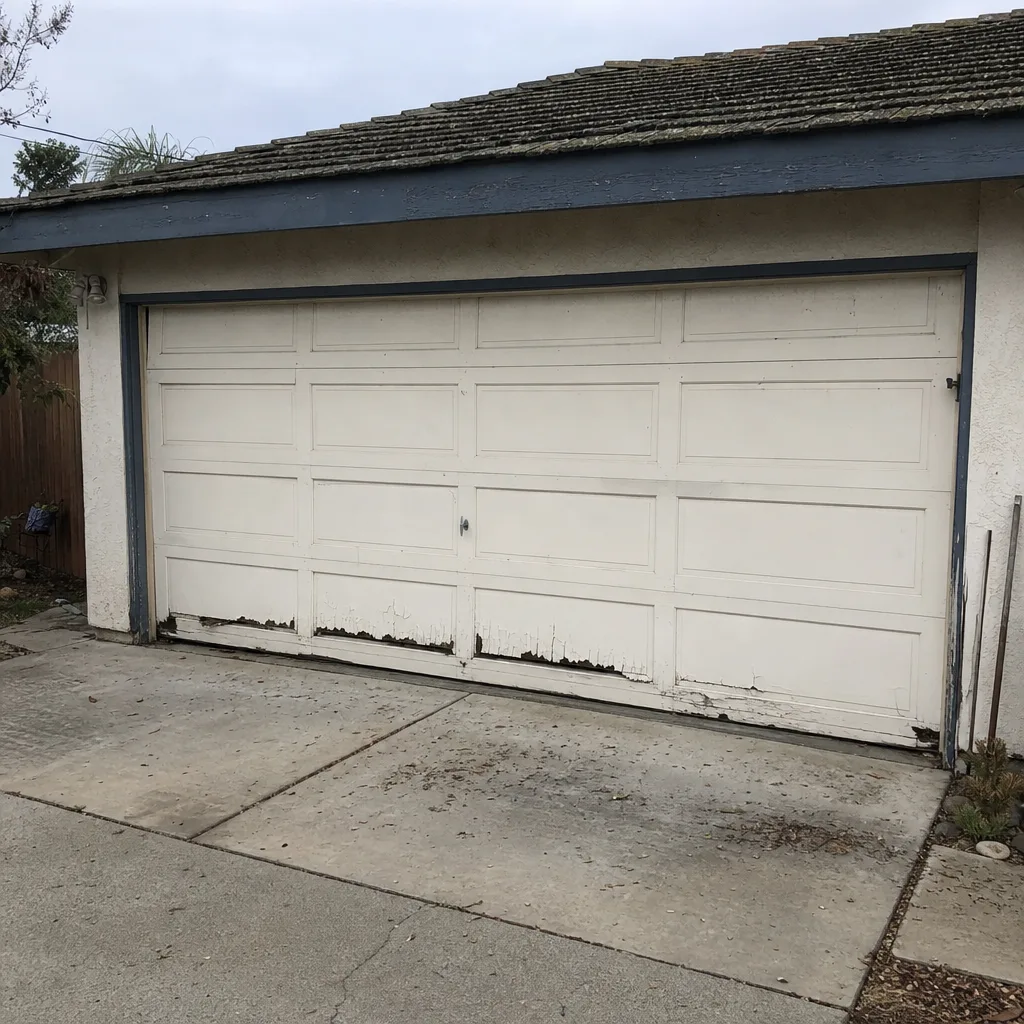 Before
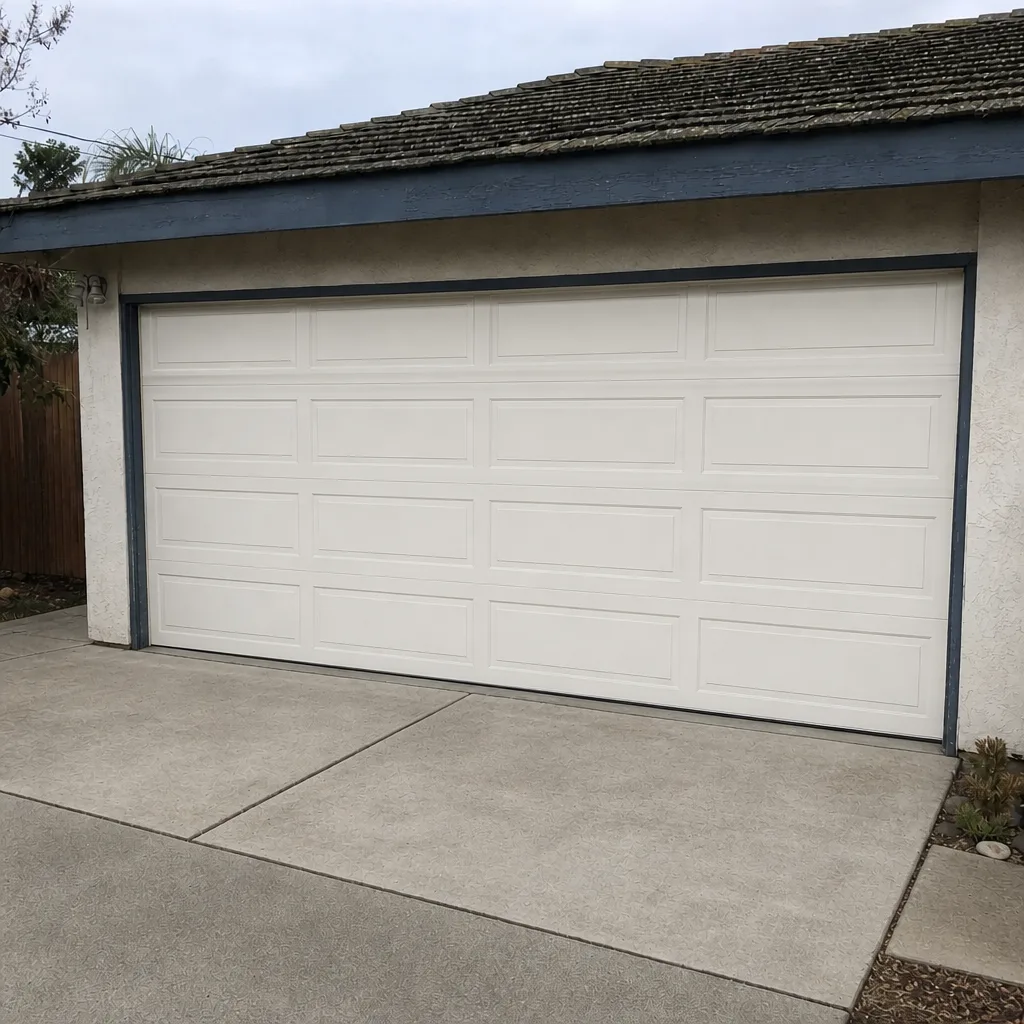 After
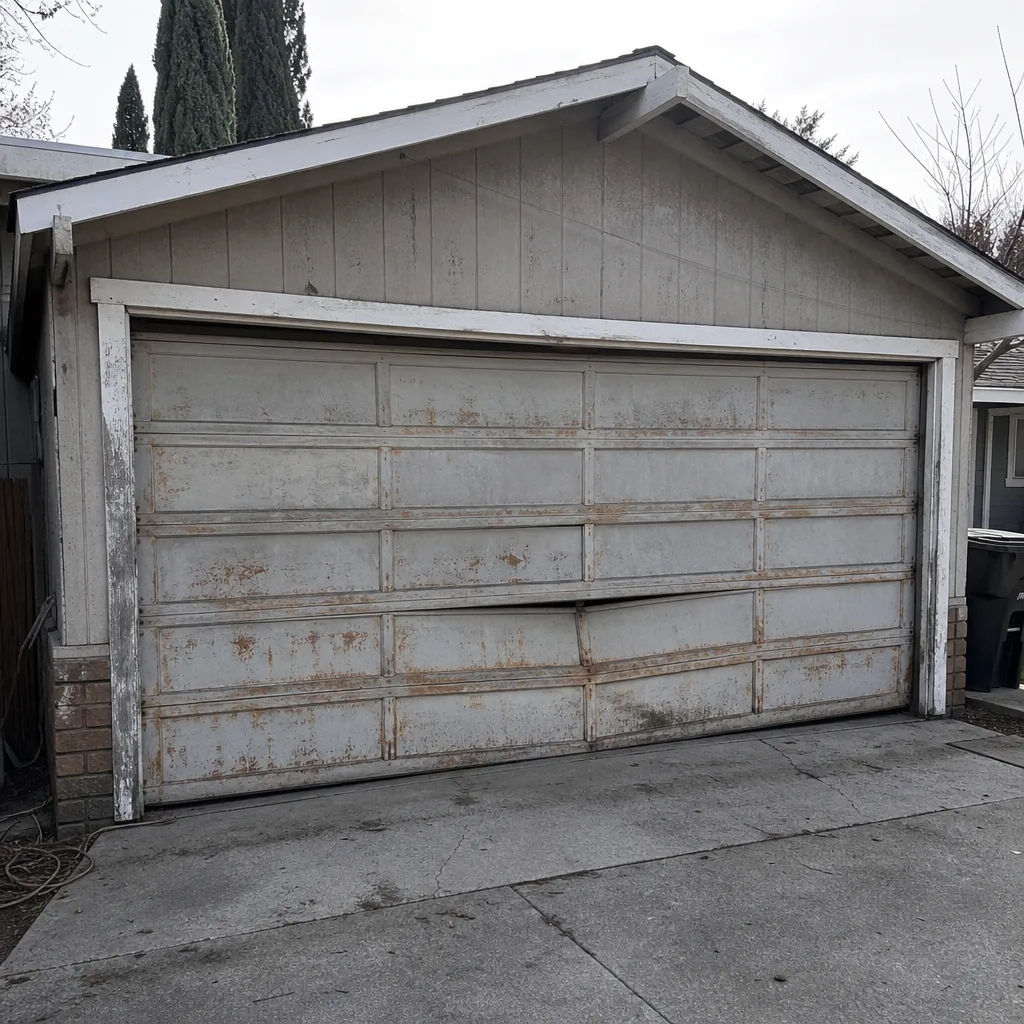 Before
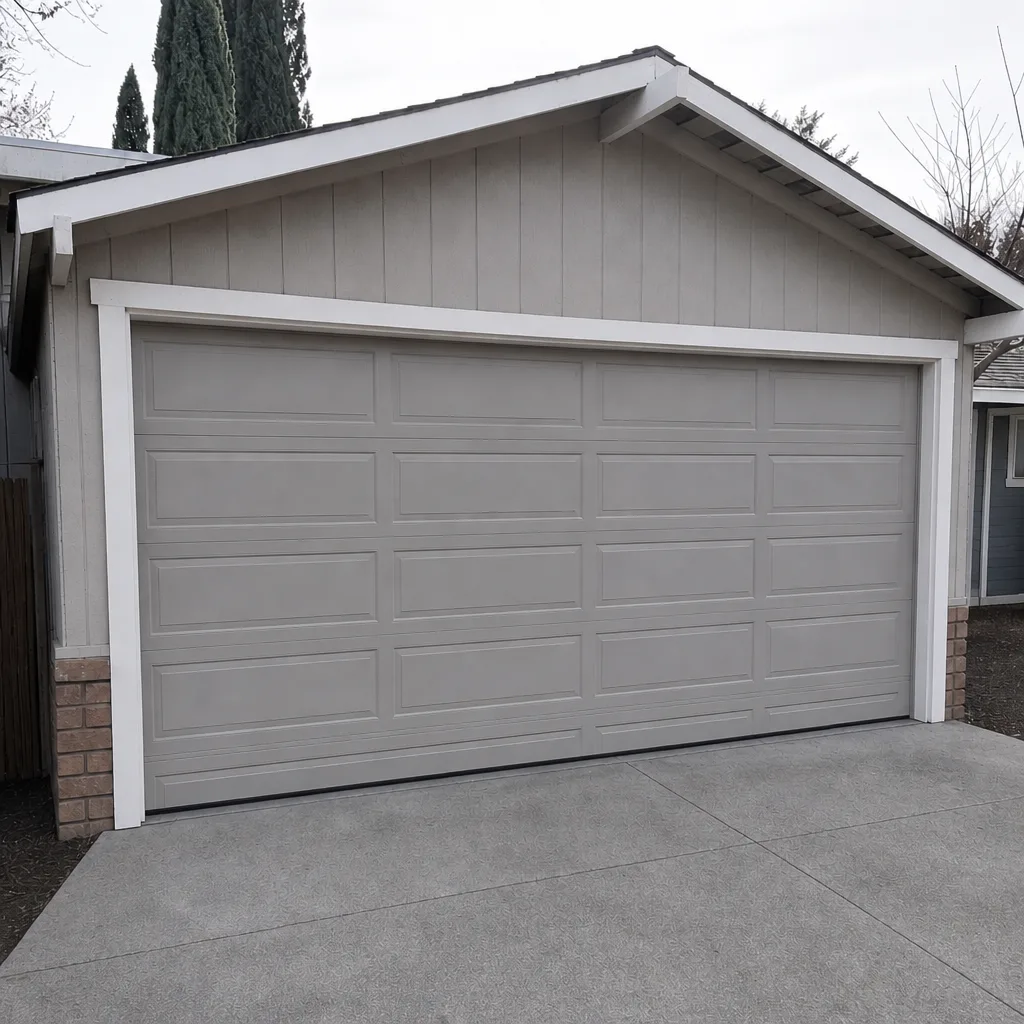 After
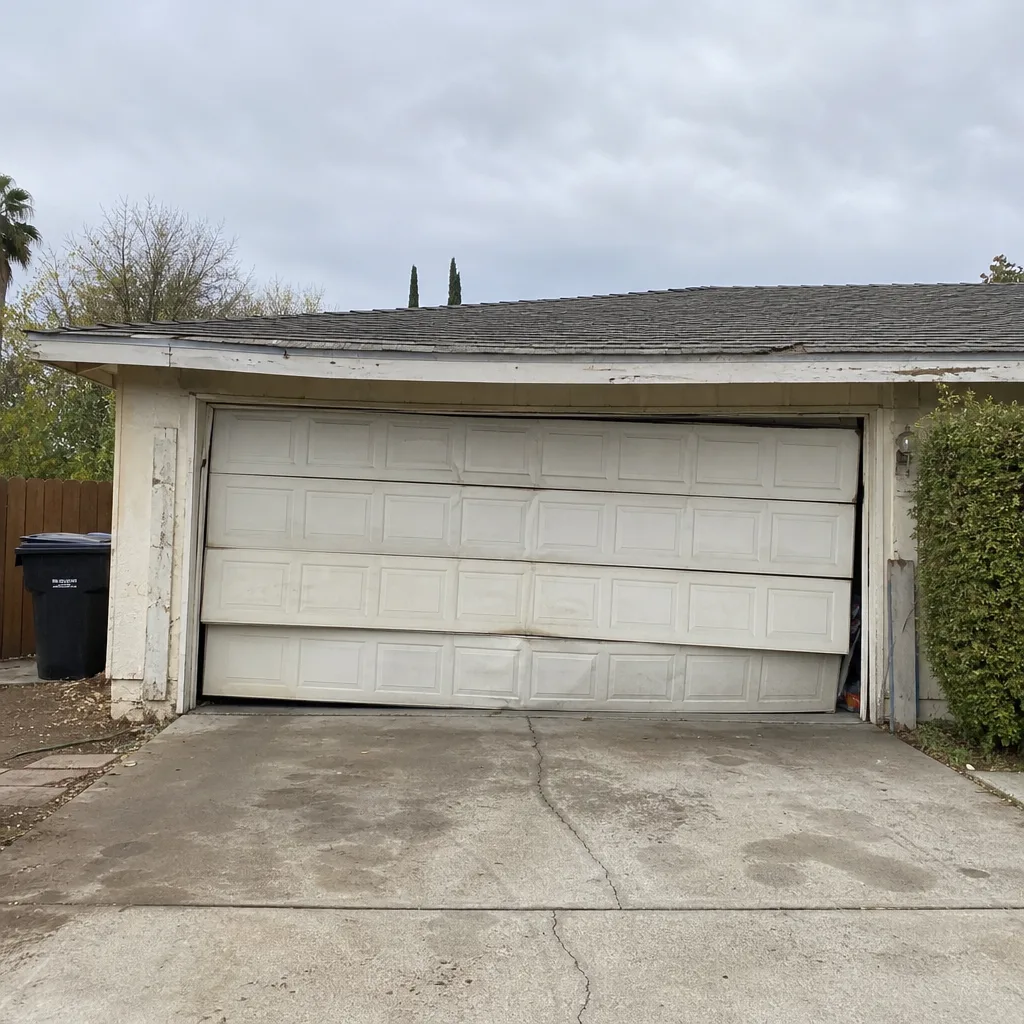 Before
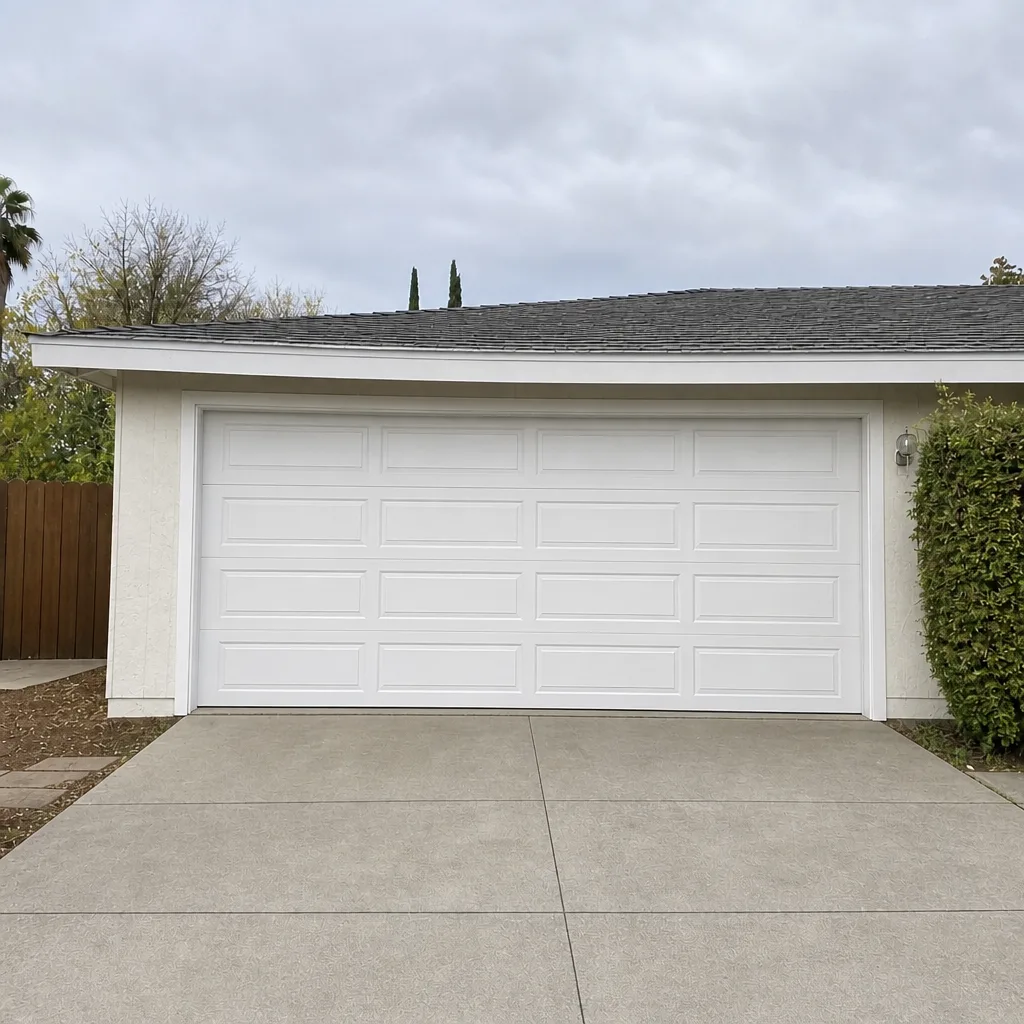 After
When to Call a Professional
Call for help the moment you see a snapped spring, a slack or frayed cable, a door that drops unevenly on one side, or a track that’s visibly bent. Call if the door reverses repeatedly and you’ve already ruled out simple sensor misalignment. Call if the opener hums without moving the door, or if a grinding noise is coming from inside the motor housing. Call if the door feels dangerously heavy or the safety reverse fails the two-by-four test. These are the situations where waiting turns a straightforward repair into a more expensive one, or an injury. Anything involving stored spring tension or the opener motor belongs with a trained technician, every time. Gallant Garage Door Repair offers free estimates in Visalia – call (877) 754-6982. We answer 24/7. Fast dispatch, 7am-7pm, Sunday through Friday. We’re closed Saturday. Our technicians have up to 8 years of experience across eight major brands, and estimates are always free.
Frequently Asked Questions
Typical garage door repairs in Visalia run from $75 to $450 depending on the component. A single torsion spring replacement is typically $180 – $340, a cable replacement $150 – $280, and weatherstripping $100 – $250. A matched pair of torsion springs runs about twice the single-spring figure. The written estimate sets the final price, and the estimate is free. Call (877) 754-6982 for an exact quote tailored to your door.
We offer same-day service for many repairs when we can schedule it. Fast dispatch runs from 7am to 7pm, Sunday through Friday, and we’re closed Saturday. A call outside dispatch hours gets booked into the next opening. Call (877) 754-6982 – we answer 24/7, and the estimate is free.
No. The price is quoted and agreed before any work starts. Once a technician confirms the diagnosis on site, you’ll receive a written estimate. If you approve it, that’s the price. If the repair turns out to be more involved than expected, you’ll hear the revised number before anything else is done. Call (877) 754-6982 for a free estimate.
Yes. Our technicians are trained and experienced across garage door and opener systems, and we work with fully insured local professionals. Every repair is handled by someone trained on the system in front of them, and we stand behind the work. Call (877) 754-6982 to ask any specific credential questions before scheduling.
A door that reverses before closing is usually responding to spring tension loss, not to a sensor problem. When the spring weakens, the door becomes heavier than the opener expects, and the force sensing interprets that as an obstruction. Other likely causes include limit switch drift from heat expansion and a misaligned track. Run the 60-second test first – disconnect the opener and lift the door by hand. If it’s heavy, the spring is the issue. Call (877) 754-6982 if you’re not sure which cause applies.
No. Torsion springs and extension springs both store enough energy to cause serious injury in a fraction of a second. There is no safe homeowner method for replacing them, no matter what videos show. Weatherstripping, sensor alignment, lubrication, and roller replacement are safe to handle yourself; spring and cable work are not. Call (877) 754-6982 and let a trained technician handle it.
Central Valley heat dries out lubricant on rollers, hinges, and the torsion tube faster than cooler climates do. Dry rollers grind, and the noise often gets blamed on the opener. A lubrication routine on the moving parts with a proper garage door lubricant handles this. If the grinding continues after lubrication, a worn roller or hinge is the cause – call (877) 754-6982 to get it checked.
No, usually not. Most “opener problems” are actually door-side mechanical issues – dry rollers, worn hinges, a bent track – and the opener is just transmitting the noise from the door. Run the door-versus-opener test first: if the carriage travels smoothly with the door disconnected, the opener is fine. Call (877) 754-6982 for an accurate diagnosis before replacing anything.
The Bottom Line
Read the system, not the symptom. A reversing door is almost always a spring or balance issue, not a sensor problem. A grinding opener is almost always a door-side mechanical resistance, not a failing motor. The 60-second door-versus-opener test tells you which category you’re in, and the symptom-to-cause table tells you what to expect from the fix. Springs, cables, and drums belong with a trained technician; weatherstripping, sensor alignment, lubrication, and roller replacement are within reach of a careful homeowner. In Visalia, the Central Valley heat accelerates wear on weatherstripping and drifts limit switches out of calibration, so a seasonal routine makes a real difference. When the door is beyond troubleshooting, Gallant Garage Door Repair handles the whole system – repair, opener service, and installation – with one call. Call (877) 754-6982. We answer 24/7. Fast dispatch, 7am-7pm, Sunday through Friday. The estimate is free, and the written quote is the price you pay.
Written by the team at Gallant Garage Door Repair.