
Last updated November 14, 2026
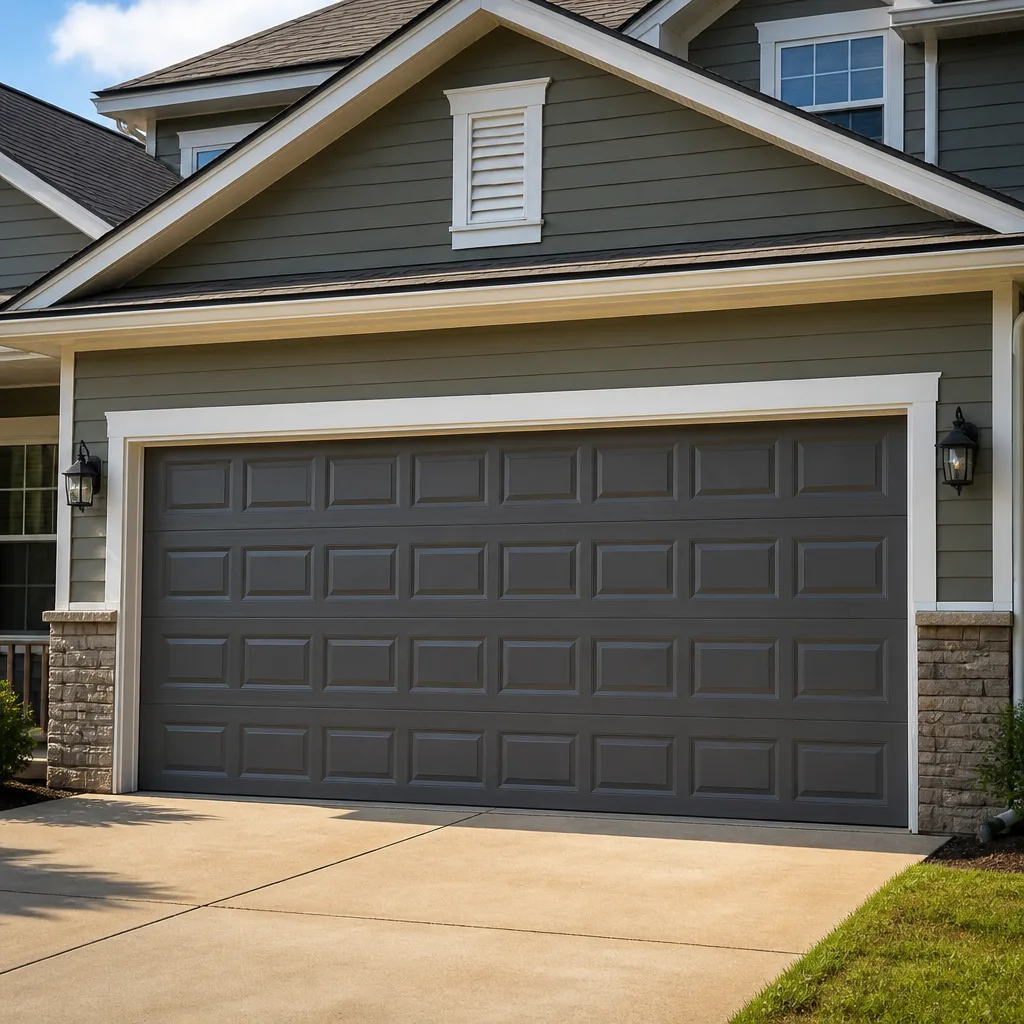 Raised-panel steel
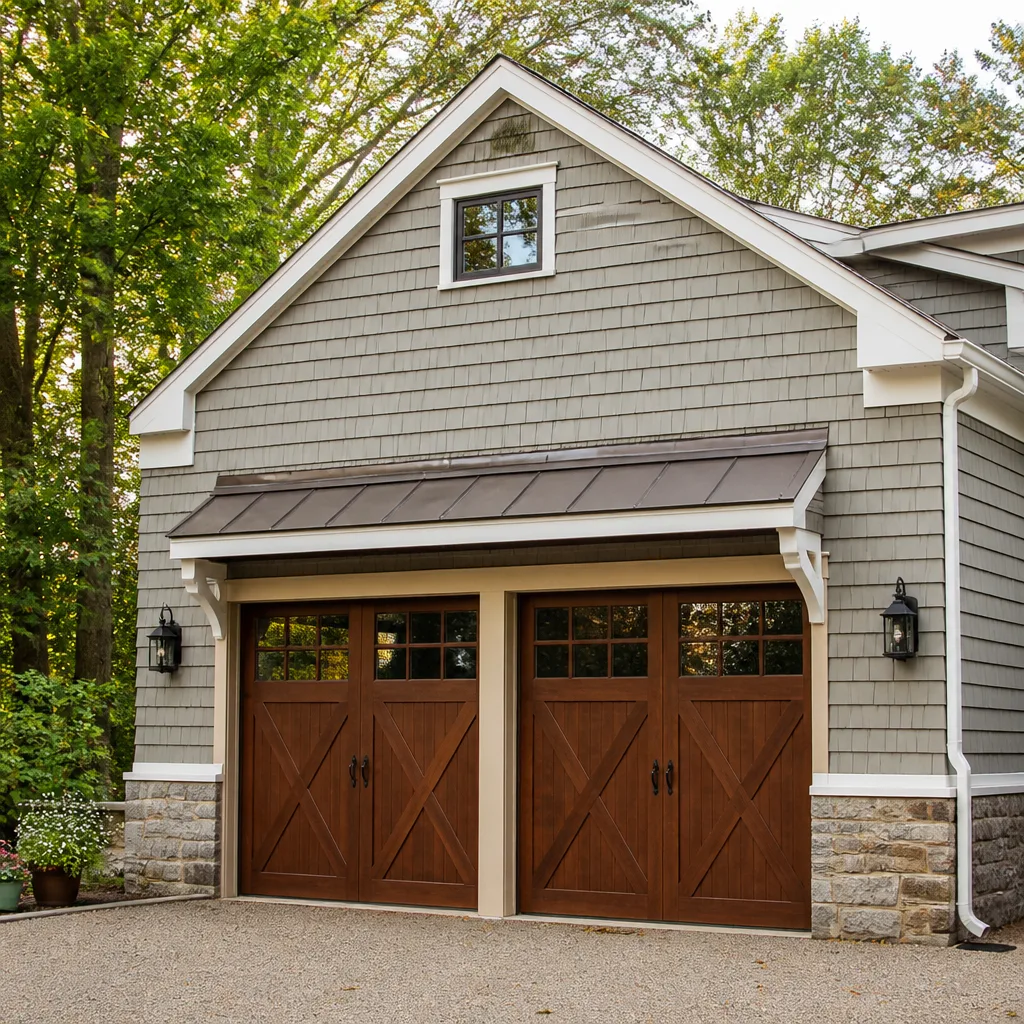 Carriage house
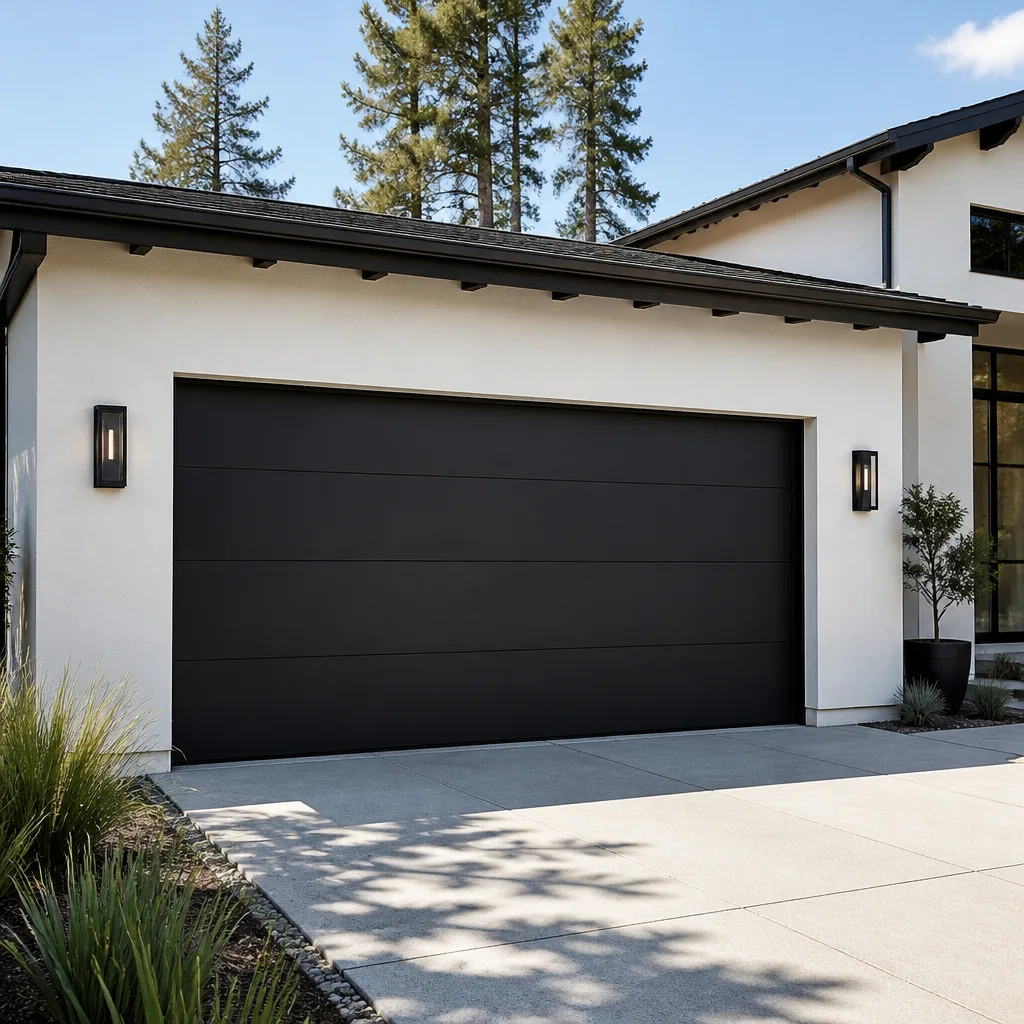 Modern flush
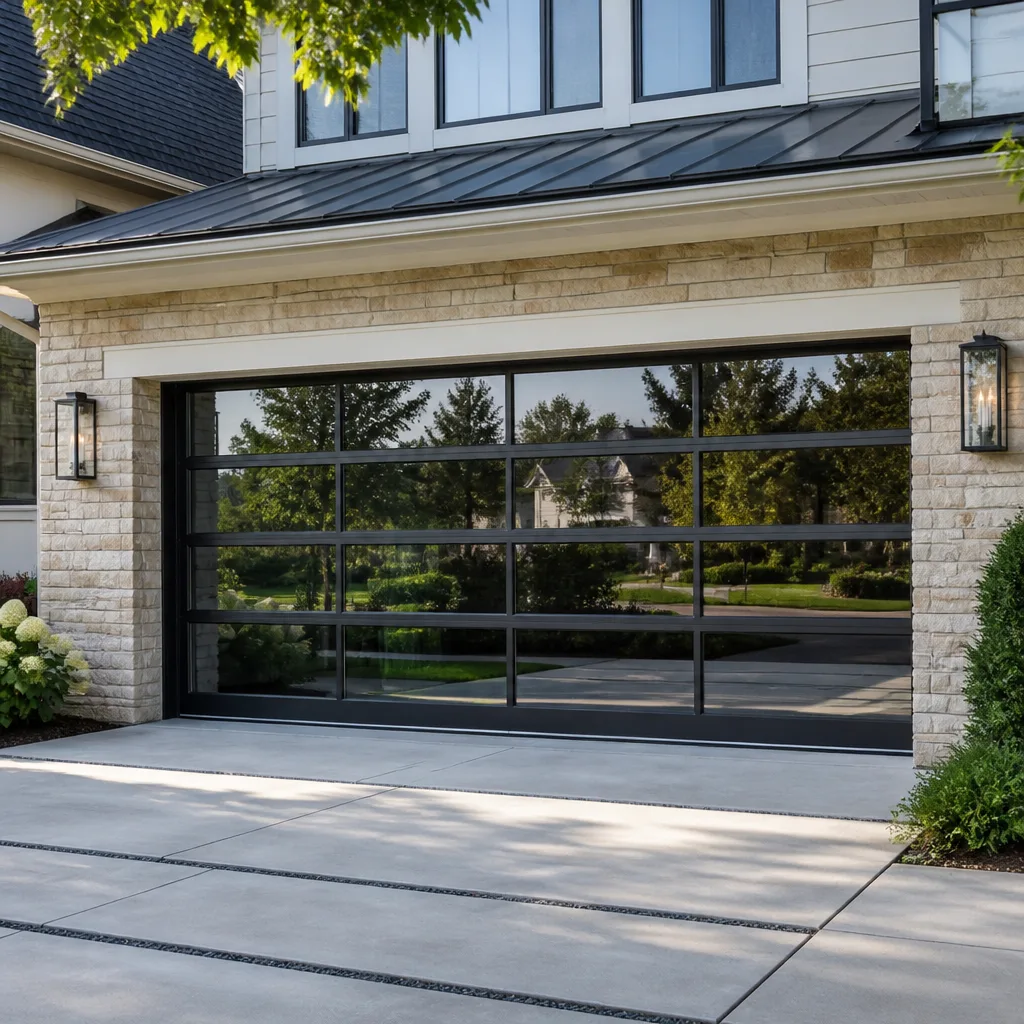 Full-view glass
 LiftMaster openers
 Chamberlain openers
Full 25-point door and opener safety check with every visit - springs, cables, rollers, tracks, and your LiftMaster or Chamberlain opener included
You get a price before we start. It does not change when the pro arrives.
Get your free estimateDIY vs Professional Garage Door: The Visalia Homeowner’s Decision Guide
Most DIY-versus-pro guides get the garage door wrong in one of two directions. Some frame the whole system as untouchable, which pushes homeowners into paying for jobs they could safely handle with a screwdriver. Others treat a torsion spring like a slightly stiff cabinet hinge, which is how people end up in the emergency room. The truth sits in the middle, and it splits cleanly by task. A torsion spring stores enough mechanical energy to cause serious injury the instant it lets go, and emergency rooms in Tulare County treat injuries from attempted DIY spring swaps on a regular basis. This guide draws the line for you. We’ll go task by task, show you which jobs are genuinely safe, which need real research, which you should never touch, and how the math works out for a Visalia homeowner.
Quick Answer
You can safely handle cleaning, lubrication, visual inspections, sensor alignment, and remote or battery swaps on your own. Spring, cable, and high-tension hardware work should go to a trained technician because the stored energy in those parts can injure you before you have time to react. Opener diagnosis and panel replacement fall in between: some tasks are doable with the right tools and real research, and some are cheaper and safer to hand off. For anything involving the springs, call (877) 754-6982. We answer 24/7, with fast dispatch from 7am to 7pm.
Styles & brands we work with
- Raised-panel steel
- Carriage house
- Modern flush
- Full-view glass
- LiftMaster openers
- Chamberlain openers
Table of Contents
- The Three-Tier Task List: Safe, Careful, Never
- Why Torsion Springs Sit in the Never Column
- DIY vs Professional Cost Comparison for Three Common Jobs
- How to Spot a Dangerous YouTube Tutorial
- What You Can Do Right Now to Extend Door Life
- The Break-Even Calculation: When a Pro Is Actually Cheaper
- How Visalia Heat and Dust Affect Your Door
- Seasonal Habits That Prevent Most Breakdowns
The Three-Tier Task List: Safe, Careful, Never
The useful way to think about garage door work is not “easy versus hard.” It’s “what happens if this part releases while I’m standing under it.” Group tasks by consequence, not difficulty, and the decisions get clearer.
Tier 1: Safe DIY
- Lubricating hinges, rollers, and tracks with a garage-door-rated lubricant. No stored energy involved.
- Cleaning the tracks with a damp cloth and checking for dents or debris.
- Testing the safety reverse by placing a small object in the door’s path and confirming it reverses.
- Aligning photo-eye sensors and wiping the lenses clean. If the door closes and then reopens, this is usually the culprit.
- Replacing remote batteries and reprogramming remotes or keypads per the opener manual.
- Visual inspection of springs, cables, and rollers for obvious wear. Looking is always safe; touching is not.
Tier 2: Requires Care and Research
- Replacing rollers. Safe in principle, but you’re working around the spring assembly and lifting the door partly off its track position. Use the right roller type and never remove a cable.
- Adjusting opener travel limits and force settings on a Genie, LiftMaster, or Chamberlain unit. Doable with the manual, but a badly set force limit can mask a failing spring.
- Replacing weather seals and bottom rubber. Straightforward on most doors, though a damaged bottom section can be harder to seat than the video suggests.
- Swapping a single cosmetic panel on a multi-panel door where the section is still manufactured. Clopay and Amarr panels are generally easier to source than older or discontinued lines.
- Replacing an opener’s logic board if you’re comfortable with low-voltage wiring and the manufacturer still sells the board.
Tier 3: Do Not Attempt Without Training
- Torsion spring replacement or adjustment. The spring is under enough tension to break bones or worse. There is no safe “just loosen it a little” version of this job.
- Extension spring replacement on older doors. Less dramatic than torsion, but still stored energy with a failure mode that can be violent.
- Cable replacement or re-spooling. Cables are under tension any time the door is down, and releasing one without the door secured can send it crashing.
- Track replacement or realignment after impact. The door’s weight has to be managed while the track comes off, and a door can drop.
- Replacing a bottom section where the cables and springs are anchored to it.
- Any work on a door that has visibly bent or broken hardware. Stop and call.
This is the same dividing line our technicians work with every day. It’s also why we focus only on garage doors: the failure modes in that Tier 3 list are specific and repetitive, and knowing them cold is the job. If you want a sense of what repair work looks like when it’s done properly, our garage door repair page walks through the common calls. When the question is the motor or the drive, garage door opener repair covers that side.
Why Torsion Springs Sit in the Never Column
A torsion spring is a coiled steel bar holding the entire weight of your door. When a technician winds it, they’re storing enough force to lift a few hundred pounds, and that force stays locked in the spring every second the door is closed. The spring doesn’t know or care whether the person who wound it had training.
What makes DIY spring work different from other home repairs is the failure mode. A bad plumbing job leaks. A bad electrical job trips a breaker or, in the worst case, shocks you. A spring that releases under load does its damage in a fraction of a second, at whatever is in its path. That’s not a scare tactic. It’s why the trade treats this part with a level of caution that looks excessive until you’ve seen a broken one.
Cables carry the same warning. They’re under tension whenever the door is down, and they run under high load during the door’s travel. A cable that snaps back or whips free can cause serious injury, and a door with a failed cable can drop without warning. The 1/8-inch steel cable involved doesn’t care about gloves.
What we can tell you to do safely around springs is look. A spring showing a visible gap is broken. Rust, sagging, or a spring that’s lost its coil shape is a call for a professional. If the door feels unusually heavy when you lift it manually, stop lifting it and get it looked at. From there, leave the wrench alone.
Where these become urgent is when the door is stuck partially open or fully open with a broken spring. In a Visalia summer, an open garage on a 105-degree afternoon will bake the contents fast. Call (877) 754-6982 and we’ll talk through the immediate steps. We answer 24/7, and a call outside dispatch hours is booked into the next opening, Sunday through Friday, 7am to 7pm.
DIY vs Professional Cost Comparison for Three Common Jobs
Cost comparisons usually stop at the parts. That’s the wrong math. Here’s a realistic look at three jobs a Visalia homeowner might consider, with the costs that don’t fit neatly in a parts cart.
Spring Replacement
- Parts: A replacement torsion spring is generally modest in cost, but you’re buying matched pairs more often than not, so plan for double.
- Tools: Winding bars are specialized, not a stock Home Depot item, and you may have to order them.
- Time: A trained technician replaces springs in under an hour. A first-timer is looking at half a day at minimum, plus the research to do it correctly.
- Risk cost: The one category that doesn’t show up on the receipt until it does. There is no way to price in the potential for a serious injury from a DIY spring failure.
- Pro: A single spring replacement typically runs around $180 to $340, with a matched pair about twice that. You get the correct spring for your door’s weight and a written quote before anything starts.
Opener Installation
- Parts: A new opener ranges from roughly $150 for a basic chain-drive unit to $300+ for a belt-drive or smart unit.
- Tools: Drill, ladder, socket set, and some way to reach the ceiling safely.
- Time: A typical installation takes 4 to 6 hours for a homeowner. Most of that is getting the mounting and alignment right, not the wiring.
- Installation cost: A pro install of a new opener typically runs $150 to $350 on top of the unit price, depending on what’s already in place.
Panel Swap
- Parts: Varies widely. A stock Clopay or Amarr section is easier to source than a discontinued panel. Old or odd-size doors can require a full replacement.
- Time: 1 to 2 hours for a single cosmetic panel on an accessible door, assuming you found the matching section.
- Common snag: Most “just a panel” jobs turn out to involve a section holding springs or cable anchors. At that point the job shifts into the professional column.
- Pro: Panel replacement cost depends on the section and the model, so a written estimate from a specialist is the real answer here.
The pattern across all three: DIY looks cheaper when you count only parts, and gets much closer to a wash once you add tools, hours, mistakes, and disposal. The full picture is also where a specialist earns their keep, since doors and openers rarely fail in isolation. Our team works across Clopay, Amarr, Wayne Dalton, and Raynor door systems, and across Genie, LiftMaster, and Chamberlain openers, so the diagnosis accounts for the whole system instead of just the part.
How to Spot a Dangerous YouTube Tutorial
Some garage door tutorials are excellent. Others are the reason emergency rooms see the injuries they see. Since you’ll search YouTube regardless, here’s how to separate the two before you commit.
- The video skips the door-weight check. Any tutorial that removes a spring without verifying the door’s balance and weight first is skipping a step that a technician never skips. Walk away.
- It uses improvised tools. Winding a torsion spring with screwdrivers or vice grips is the single biggest red flag. You’ll see videos doing it. That’s not a guide, it’s a hazard.
- There’s no mention of the door being secured. Any work near springs or cables requires the door to be locked or clamped in place. If the video doesn’t show that step, it’s not teaching the actual procedure.
- It promises “no experience needed.” Garage door hardware doesn’t respond to confidence. A tutorial that treats the physical risk as negligible is oversimplifying.
- It jumps from “diagnose” to “replace” without troubleshooting. Real repair work starts with the easy stuff: sensor alignment, remote batteries, a tripped breaker, a locked door, a manual release that got bumped. A video that skips to “your spring is bad” is missing the diagnostic step.
- It shows work on a different door style. The procedure for an extension spring door differs from a torsion spring door. A Clopay sectional door differs from a Wayne Dalton tilt-up. Wrong-door videos are a quiet trap.
We’ve seen a lot of these videos ourselves, usually after a homeowner has followed one and the door ended up worse off. Garage doors are all we do, so we do them right, and part of that is telling people when a video gave them bad advice.
What You Can Do Right Now to Extend Door Life
The best DIY work on a garage door is the work that touches nothing mechanical under load. These habits cost very little and add real years to the door’s life.
- Lubricate the rollers, hinges, and tracks once or twice a year with a garage-door-rated lubricant. Whatever you do, skip WD-40 in the tracks and skip motor oil. Both attract dust.
- Clean the photo-eye lenses regularly. Visalia’s dust settles on those lenses, and a dirty eye causes more “door won’t close” calls than any mechanical fault.
- Run the safety reverse test once a month with a piece of wood or a roll of tape in the path. It takes under a minute.
- Tighten the visible bolts on hinges and roller brackets, but not the spring assembly. Hand-tight is fine.
- Check the weather seal at the bottom edge. A cracked or missing seal lets dust, water, and small animals in. Replace it before the door’s bottom section starts taking damage.
- Clear the tracks of debris with a dry cloth or a shop vac. Never lubricate the tracks themselves unless the door manufacturer specifically calls for it.
- Visually inspect the springs and cables on a schedule. If anything looks rusty, stretched, or kinked, call us before the door fails.
That’s genuinely the whole list. Everything else is either too risky or requires tools you’d only buy once. For more on the broader system, our Gallant Garage Door Repair page lays out the three service areas we cover.
The Break-Even Calculation: When a Pro Is Actually Cheaper
DIY wins when the job is simple, the parts are available locally, and the tools are in your garage. It loses when any of those three breaks down. Run through these questions honestly.
- How much is your time worth? A pro spring job that takes 45 minutes versus a DIY version that eats a half-day is a real gap, even if the parts price is lower.
- Do you already own the tools? Winding bars, a socket set, a ladder, and spring clamps add real cost to a one-time job. If you’d be renting or buying them, that’s a $50 to $150 swing on top of parts.
- Can you actually source the right part in Visalia? Common Clopay and Wayne Dalton parts are usually on a local shelf. Older or discontinued parts often aren’t, and that’s before you get to matching spring coil counts and lengths.
- What happens to the old part? Springs and old opener units need disposal, and they’re not exactly small enough to tuck into your kitchen trash. Some Visalia households handle this easily; some don’t.
- What’s the risk multiplier? For any Tier 3 job, the risk to person and property is going to swamp any parts savings. That’s not a hypothetical. It’s the reason the tier exists.
When you run those five questions against a spring replacement, a pro almost always comes out ahead. When you run them against a cosmetic panel swap, DIY can win. Run them before you make the call for any job in the middle.
How Visalia Heat and Dust Affect Your Door
Two things in the Visalia climate push garage door wear harder than most homeowners expect: summer heat and dust.
Central Valley summers routinely push past 100 degrees, and a south- or west-facing garage wall turns into an oven by afternoon. That heat does a few things to your door’s components. The lubricant on rollers and hinges dries out faster than the product label says, which means door manufacturers’ recommended intervals are often longer than what this climate actually needs. Metal expands, and doors that were adjusted tight in a cooler season can start to bind or drag by July. Wood and some composite panels can dry out and develop sun damage on the outward face, which is why a steel or aluminum door is the better call for a garage that catches full afternoon sun.
Dust is the other side. Visalia’s agricultural dust and summer winds settle into every track and hinge. That grit turns proper lubricant into grinding paste over time, and it’s a big reason door rollers in this area wear faster than the manual suggests. Wiping the tracks clean every few months makes real difference.
What that means practically: inspect your door more often than a friend in a milder climate would, and don’t assume the manual’s lubrication schedule is literally right for you. If you’re in a newer development off Mooney Boulevard or west of town where there’s less tree cover, plan for more frequent checks.
Seasonal Habits That Prevent Most Breakdowns
Most garage door failures are not sudden. They build up quietly for months and then surprise you on a bad morning. A simple seasonal routine catches most of them.
- Spring (late March or April): Clean the tracks, apply fresh lubricant, test the safety reverse, and check the weather seal for winter damage.
- Summer (July before the peak heat): Look for spring sag, listen for new noises, and check that the opener’s force settings aren’t doing work the spring should be doing.
- Fall (October): Clear debris from tracks, tighten visible bolts, replace the bottom weather seal if it’s showing wear.
- Win/ter (December or January): Mild winters mean cold isn’t your problem, but the temperature swings do bring new noise. Listen for grinding, groaning, or a door that suddenly won’t close all the way.
If the door starts making a new sound and you’re not sure what it’s telling you, call (877) 754-6982. We answer 24/7, and a call outside normal hours is booked into the next opening, Sunday through Friday, 7am to 7pm. Diagnosing early is a much cheaper habit than diagnosing after a failure.
Common Mistakes to Avoid
- Trying to wind a torsion spring yourself. It’s the single most dangerous garage door task there is. Any video that makes it look easy is leaving out the part where someone can get hurt.
- Replacing a spring without matching the original. Springs are matched to the door’s weight. A spring with the wrong wire diameter or length will fail earlier and work the opener harder.
- Lubricating the tracks. Oil attracts Visalia dust like a magnet. The tracks are meant to run dry; the rollers and hinges are what need the lube.
- Ignoring a sensor problem as “just a glitch.” In a hot, dusty environment, misaligned photo eyes become a daily issue. Small fix, big quality of life.
- Buying a new opener when the door is the problem. A heavy door or a broken spring will kill a new opener fast. Diagnose the whole system before you buy anything.
- Assuming a single panel swap is always simple. If the section you’re replacing holds the springs or cable anchors, the job is a professional one. Check which section you’re dealing with first.
- Running an opener that’s clearly struggling. A door that opens slower than it used to, or needs more force, is a symptom. Plowing through it grinds the opener down along with the door.
See the difference
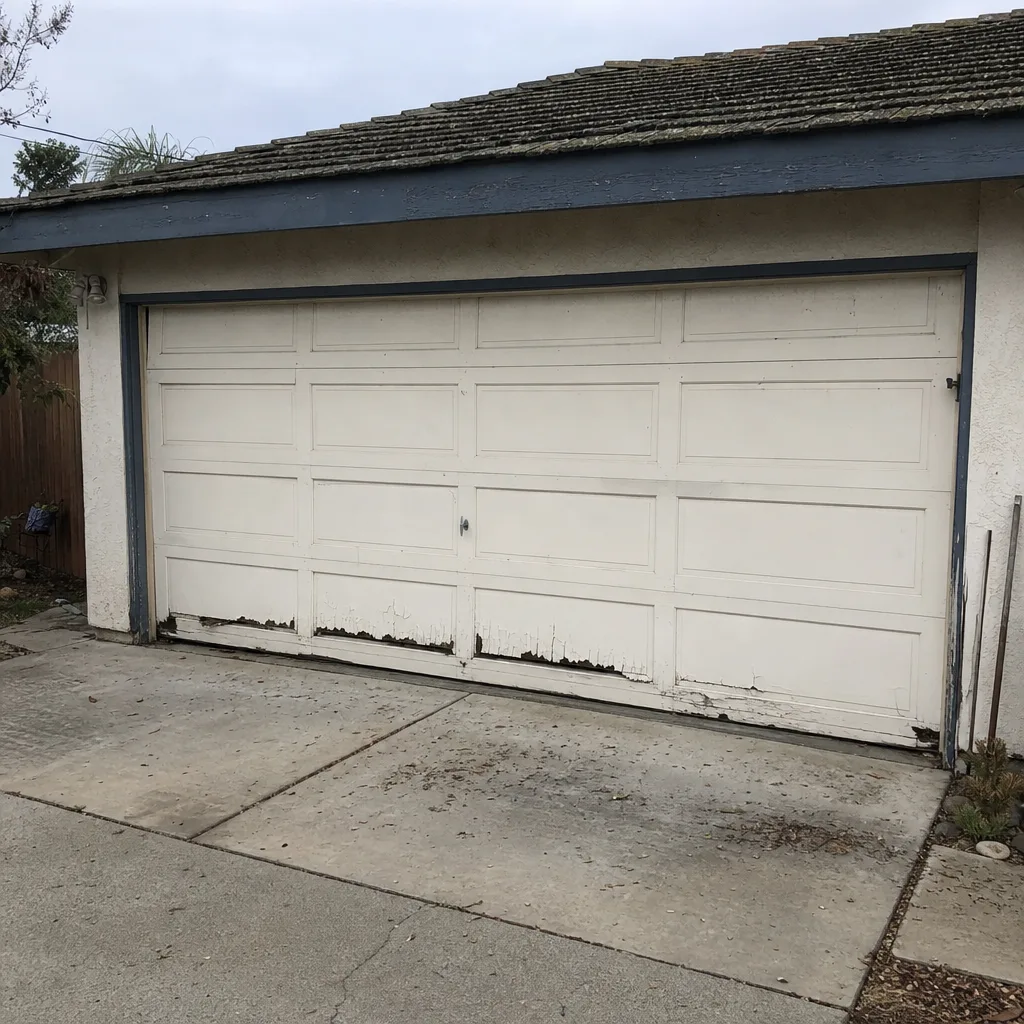 Before
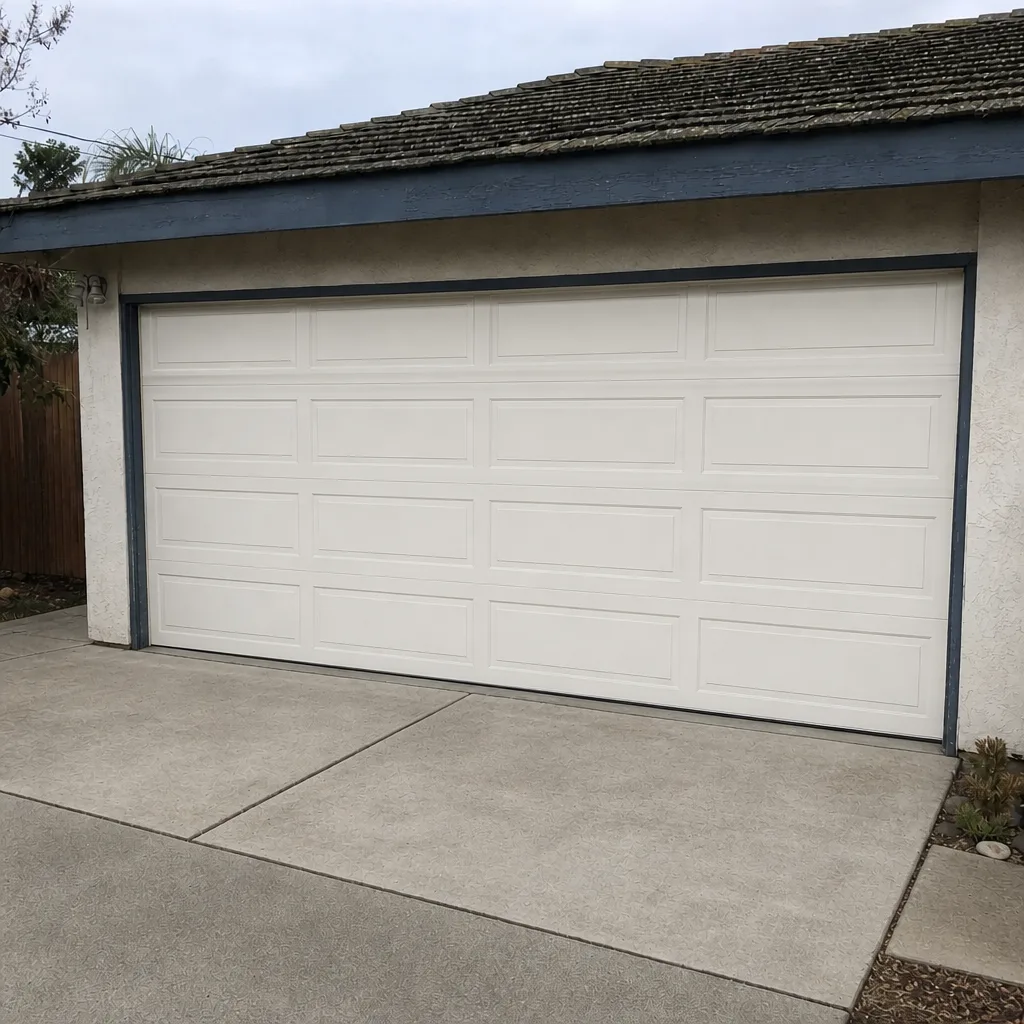 After
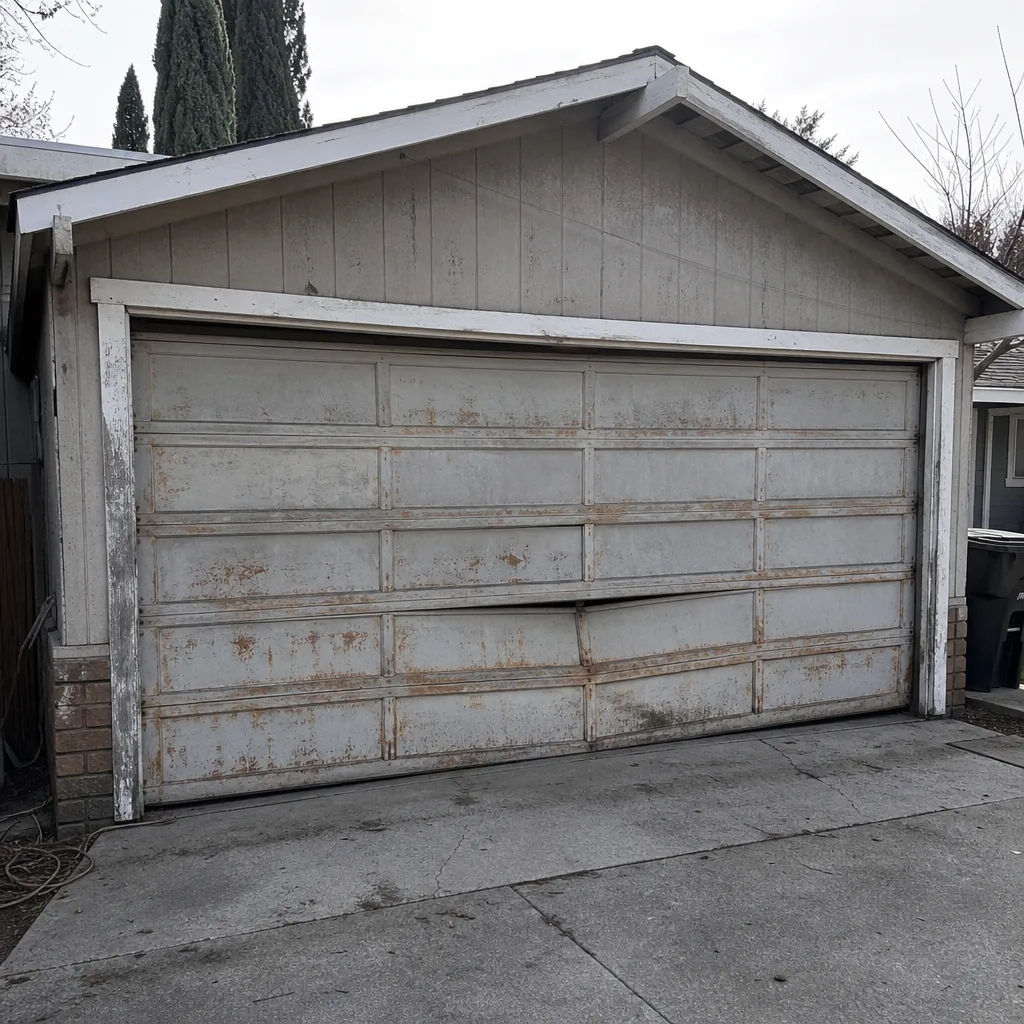 Before
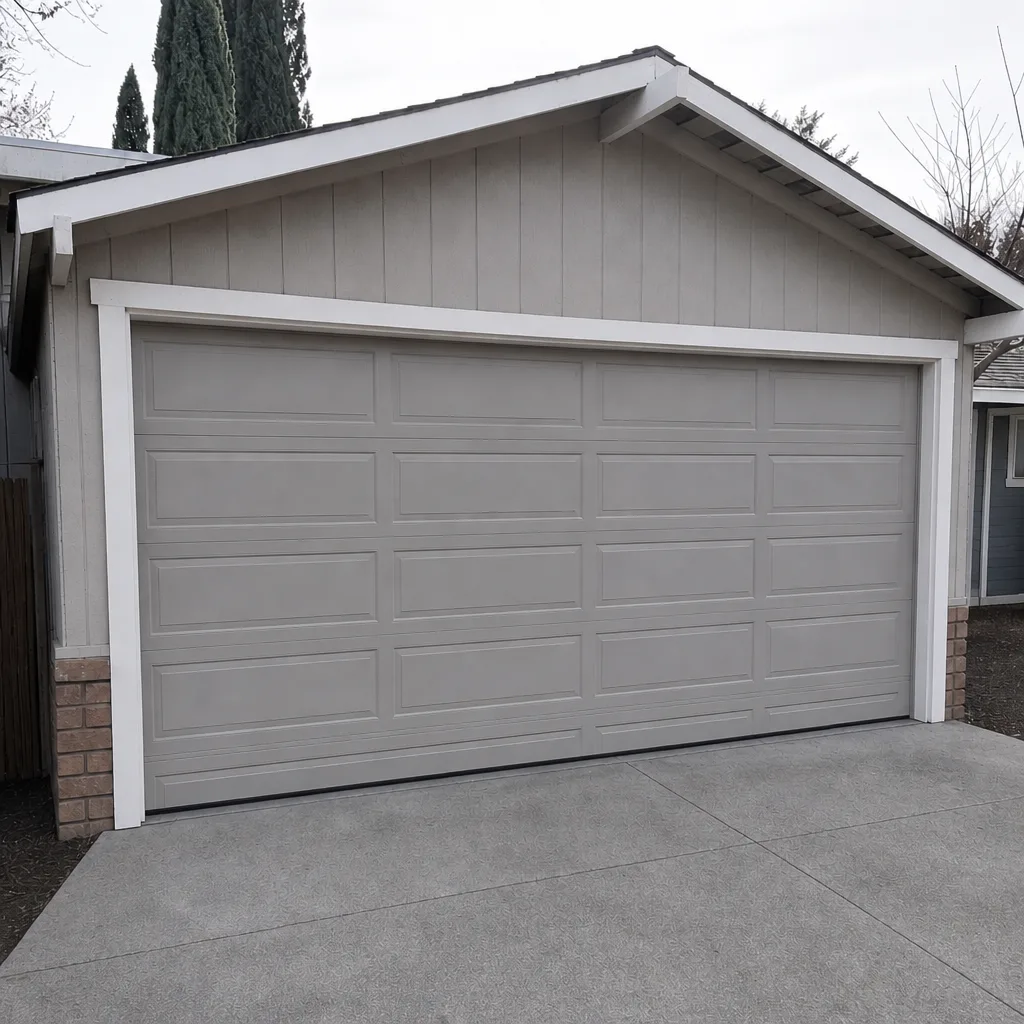 After
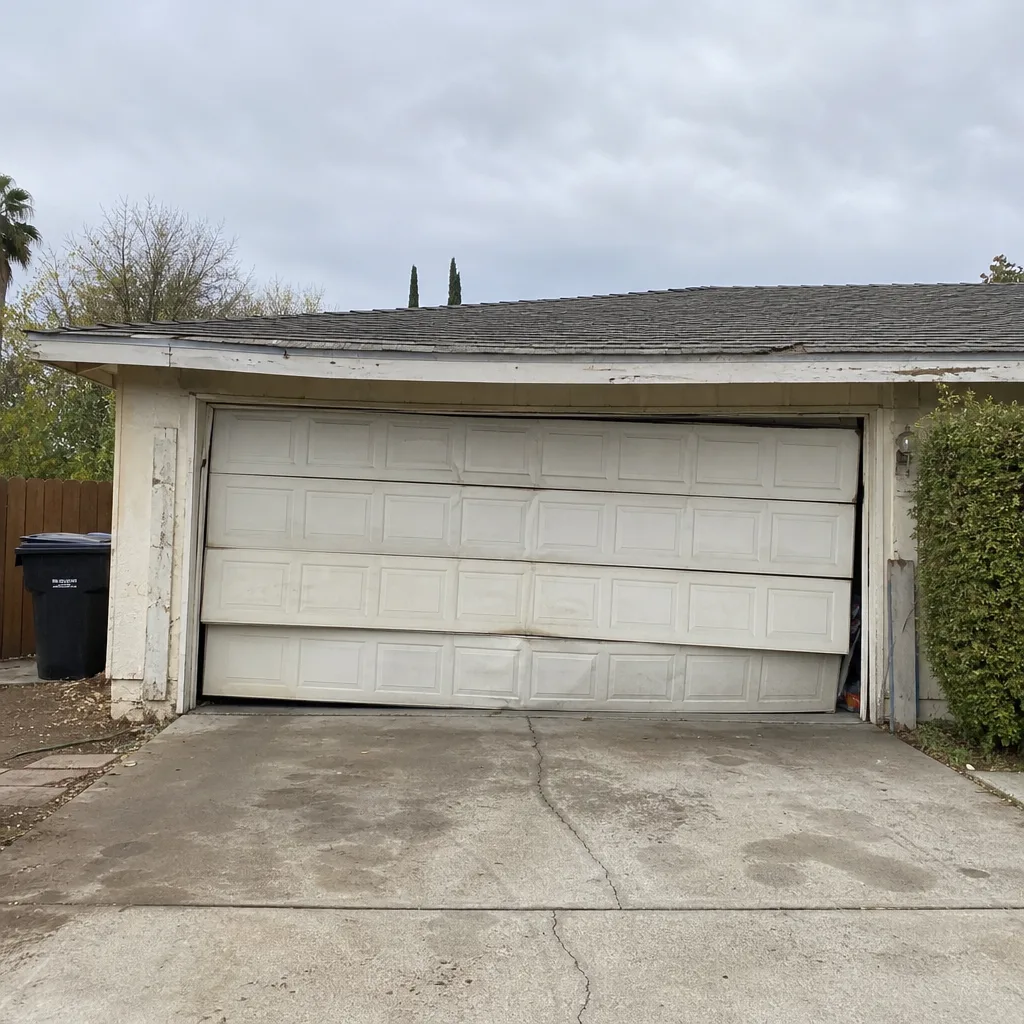 Before
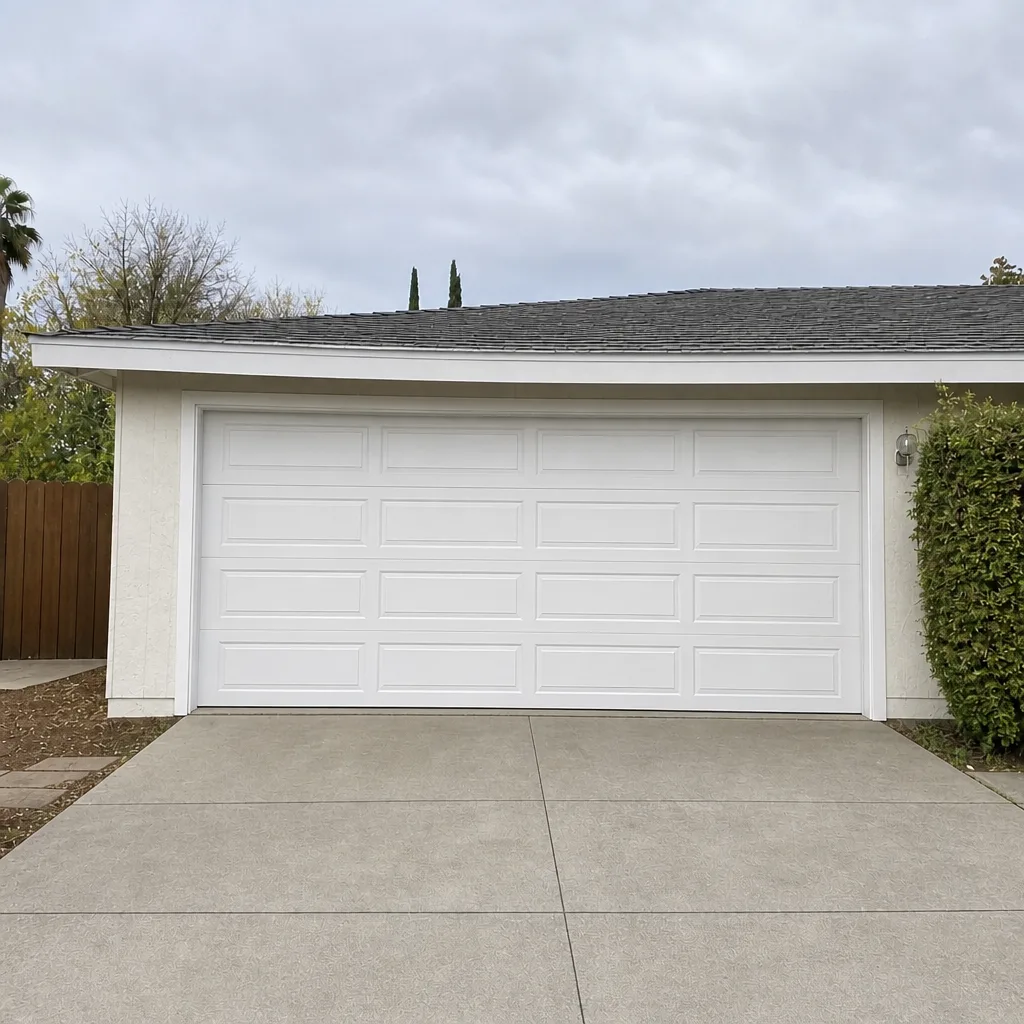 After
When to Call a Professional
Call a professional the moment the task involves a spring, cable, track realignment, or a door that has come off its normal travel. That’s not a padded list. Those jobs carry physical risk that no amount of research removes. Call if the door is stuck open, uneven at the bottom, off its tracks, or making a noise it’s never made before. Call if you’ve tried the safe fixes and the problem hasn’t gone away. And call if you’re planning a new door or opener and want a real conversation about what fits your house rather than a sales pitch.
Gallant Garage Door Repair offers free estimates in Visalia. Call (877) 754-6982. We answer 24/7, with fast dispatch from 7am to 7pm, Sunday through Friday. Our technicians have up to 8 years of experience on the leading door and opener brands, and we’ll tell you honestly when a repair will do and when a replacement makes sense.
Frequently Asked Questions
No. Torsion springs are under extreme tension every second the door is down, and a spring that releases can cause serious injury in an instant. This is the one garage door job we’d recommend against attempting yourself under any circumstances. Call (877) 754-6982 and we’ll get it replaced safely and correctly.
It’s possible if you’re comfortable with the electrical work and have the right tools, but most homeowners underestimate the mounting and alignment steps. If the opener is replacing a dead unit and the door and tracks are fine, DIY is a reasonable path. If the door is heavy, out of balance, or making noise, get the door sorted before you install anything new.
Repair costs depend entirely on the part and the door, but spring replacement typically runs $180 to $340 for a single spring, with a matched pair about twice that. Opener repairs and panel work vary. Call (877) 754-6982 for a free estimate, and you’ll get a written price before any work starts.
No. The quote we write up before work starts is the price. If we find something behind the first problem that changes the scope, we tell you first and you decide before we touch a tool. That’s the point of a written estimate, and it’s why we don’t start any job without one.
Yes, our technicians are state-licensed and insured, and they work on garage doors exclusively rather than splitting time across unrelated trades. Call (877) 754-6982 and ask about specifics before your visit.
We’re closed Saturday and open Sunday through Friday, 7am to 7pm. Call (877) 754-6982 for a free estimate during those hours, and we’ll book you into the next opening. We answer 24/7, and a call outside dispatch hours is booked into the next opening, Sunday through Friday, 7am to 7pm.
The Bottom Line
The garage door decision isn’t about whether you’re handy. It’s about which tasks carry real physical risk and which ones don’t. Lube the rollers, clean the tracks, test the safety reverse, and inspect the springs by eye. Those tasks extend your door’s life and cost almost nothing. The moment a spring, cable, or off-track condition enters the picture, stop and call a professional. That’s the line, and it’s worth respecting.
For a free estimate on any garage door question in Visalia, call (877) 754-6982. We answer 24/7, with fast dispatch from 7am to 7pm, Sunday through Friday. Free estimates, upfront pricing, and a written quote before any work starts.
Written by the team at Gallant Garage Door Repair.